When a tree should come down
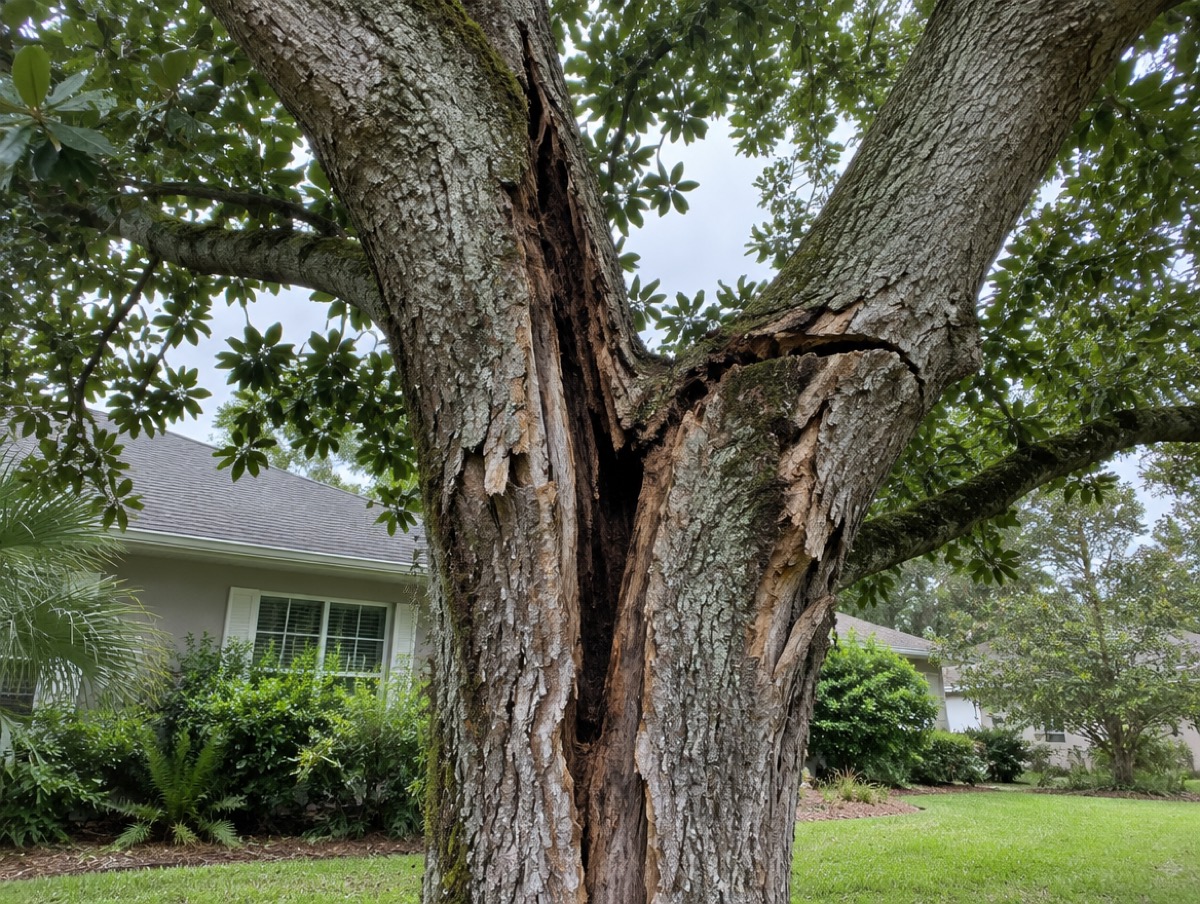
Most removals start with one of a handful of problems. The tree is dead or dying, it has split or opened a cavity, it leans over something you care about, or its roots are lifting a slab. Storm season adds pressure, because the tree that looked fine in May is the one people worry about in September.
Laurel oak earns extra attention. UF/IFAS puts its life span at roughly 50 to 70 years, notes that it breaks easily, and says its trunk and big limbs often hollow from decay (UF/IFAS ST549). An old laurel oak over a bedroom is worth a professional look.
- Dead limbs that snap instead of bend
- Mushrooms, or soft and crumbly wood, at the base
- A lean that is new, or soil heaving on one side
- Cracks where two large trunks meet
- Most of the canopy hanging over the roof, pool cage or a neighbor's yard
How a removal usually goes
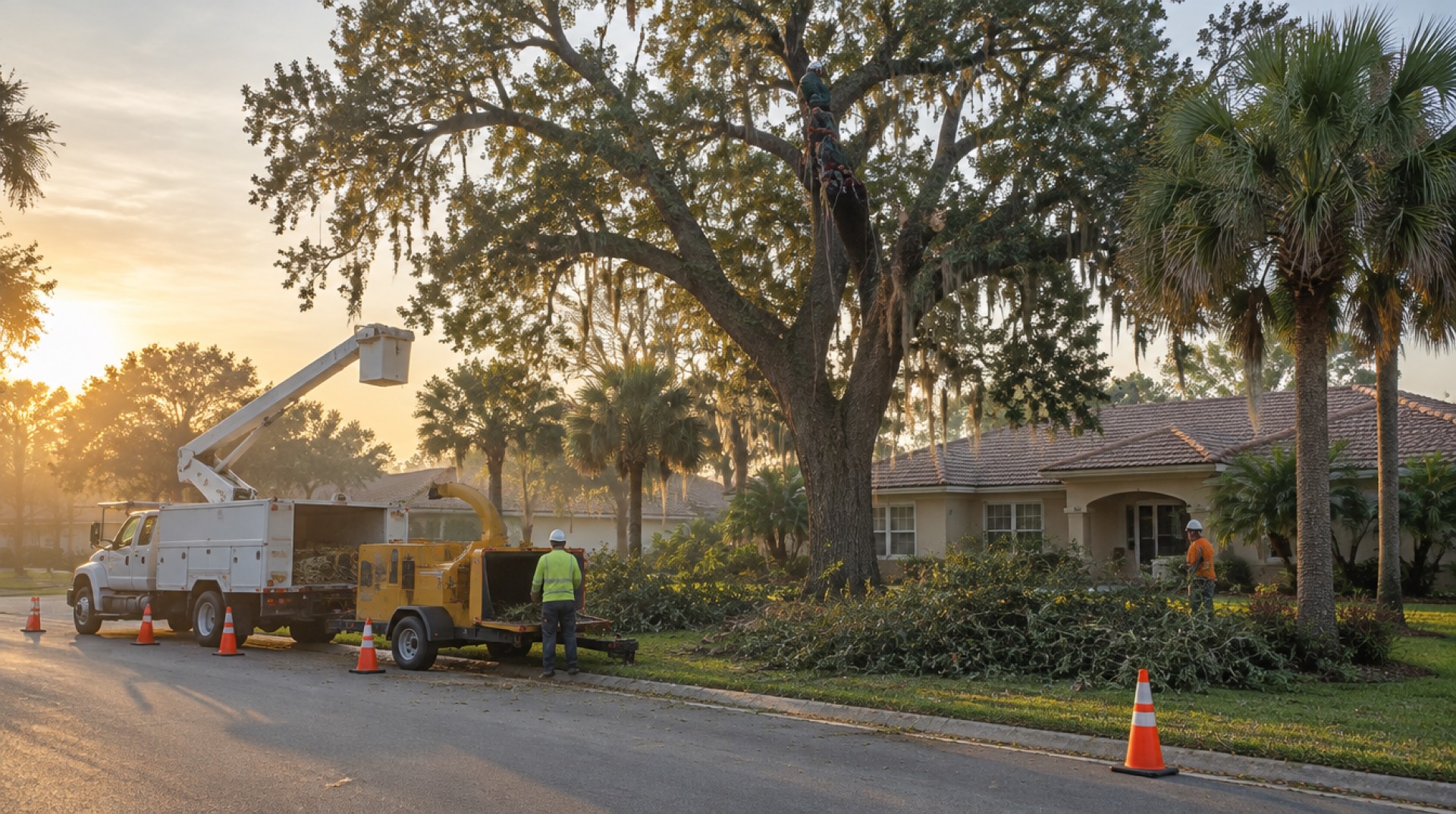
On an open lot out in Port Malabar or Grant-Valkaria a crew may drop the tree in one piece. Over a roof or a screened pool it comes down in sections: a climber or a bucket truck takes the limbs, then the trunk is cut into short pieces and lowered on ropes. Where there is no room to lower anything, a crane lifts the pieces out over the house. Crane removals have their own page.
The method drives most of the price, so ask the crew which approach they plan and why.
What changes the price
No two removals price the same, which is why the crew needs to see the tree or clear photos of it. These are the usual drivers. For published ballpark ranges and where they come from, see the tree removal cost guide.
- Height and trunk diameter
- What sits underneath: roof, pool cage, fence or power line
- Room for a bucket truck or crane, and the width of the gate
- Whether the wood is hauled away, chipped or left in rounds
- Stump grinding, which is often a separate line
- Whether your city or the county wants a permit for that tree
Check the permit question first
Whether a permit is needed depends on where the tree stands. Unincorporated Brevard (including Merritt Island), Palm Bay, Melbourne, Titusville and the beach towns each write their own rules. Palm Bay, for example, requires a permit to remove a tree 6 inches or more in diameter at breast height, with a list of exceptions (Palm Bay Code s. 175.014).
Size thresholds shift with geography, too. In the unincorporated county a hardwood counts as protected at 10 inches in trunk diameter on the mainland and Merritt Island, but at 1.5 inches on the barrier island (Brevard County Code s. 62-4332). The permit guide goes city by city.
State law adds a wrinkle. Under section 163.045, a city or the county can't require a permit to remove a tree on a single-family home lot when the owner has a signed assessment from an ISA Certified Arborist or a Florida licensed landscape architect finding the tree poses an unacceptable risk (F.S. 163.045). It doesn't cover vacant lots or mangroves. Confirm with your permitting office before anything is cut.
Wood, chips and the stump
Ask early what happens to everything that comes down. Most crews chip the brush on site and either haul the chips or dump them where you want mulch. Trunk wood is heavier. It can leave on a truck, stay as rounds stacked by the shed, or get cut to firewood length. Hauling every piece costs more than leaving some of it, so decide before the price is set.
The stump is its own decision. Ground out, it sits below the grass and the lawn can grow back over it. Left alone, a big oak stump can stay in the yard for years. The debris hauling and stump grinding pages cover both.
After a storm
If a dead or badly damaged tree has to come down right away in unincorporated Brevard, the county code says to document the threat first: photos of the tree and the damage, rough height, spread and trunk diameter, and how far it stands from the house (Brevard County Code s. 62-4334). Those photos are worth taking anywhere in the county. Stay clear of any line the tree is touching and report it to your electric utility.
Settle these before anyone starts cutting
A removal price is only useful if you know what it covers. Get the answers on the written estimate, or in a text you can scroll back to.
- Is hauling included, or will rounds and brush be left in the yard?
- Is the stump ground, and how far below the grass?
- If a permit is needed, who applies for it and who pays the fee?
- What protects the lawn, sprinkler heads and pavers from the trucks?
- Can they show a current certificate of liability insurance and workers' comp?
- What day will they start, and how long should the job take?
Questions people ask
Is the stump included?
Not always. Many crews price stump grinding as its own line, so ask for it in writing either way. The stump grinding page covers the options.
Do I need to be home for the removal?
Usually not for the cutting itself, as long as the crew can reach the tree and knows where the wood goes. Being there for the first look helps, so you can point out sprinkler heads, septic lids and anything else buried in the yard.
How long does a tree removal take?
A mid-size tree in an open yard is often down and cleaned up in a few hours. A big oak taken apart in sections over a roof can fill a whole day, and a crane job adds setup time. Ask the crew for their estimate when they price it.
How close can a tree be to my house before it's a problem?
There's no single safe distance. Species, health and lean matter more. One quick check: compare the tree's height with its distance from the house. If the tree is taller than that gap, the house is within its reach, and a decaying laurel oak in that spot deserves a closer look.
Can a tree with an eagle nest be removed?
Bald eagles and their nests are protected under state and federal law, and FWC recommends keeping a 660-foot buffer from nests before land clearing or construction (FWC bald eagle FAQs). If there is a big stick nest in the tree, contact FWC before anyone cuts.