The season sets the calendar
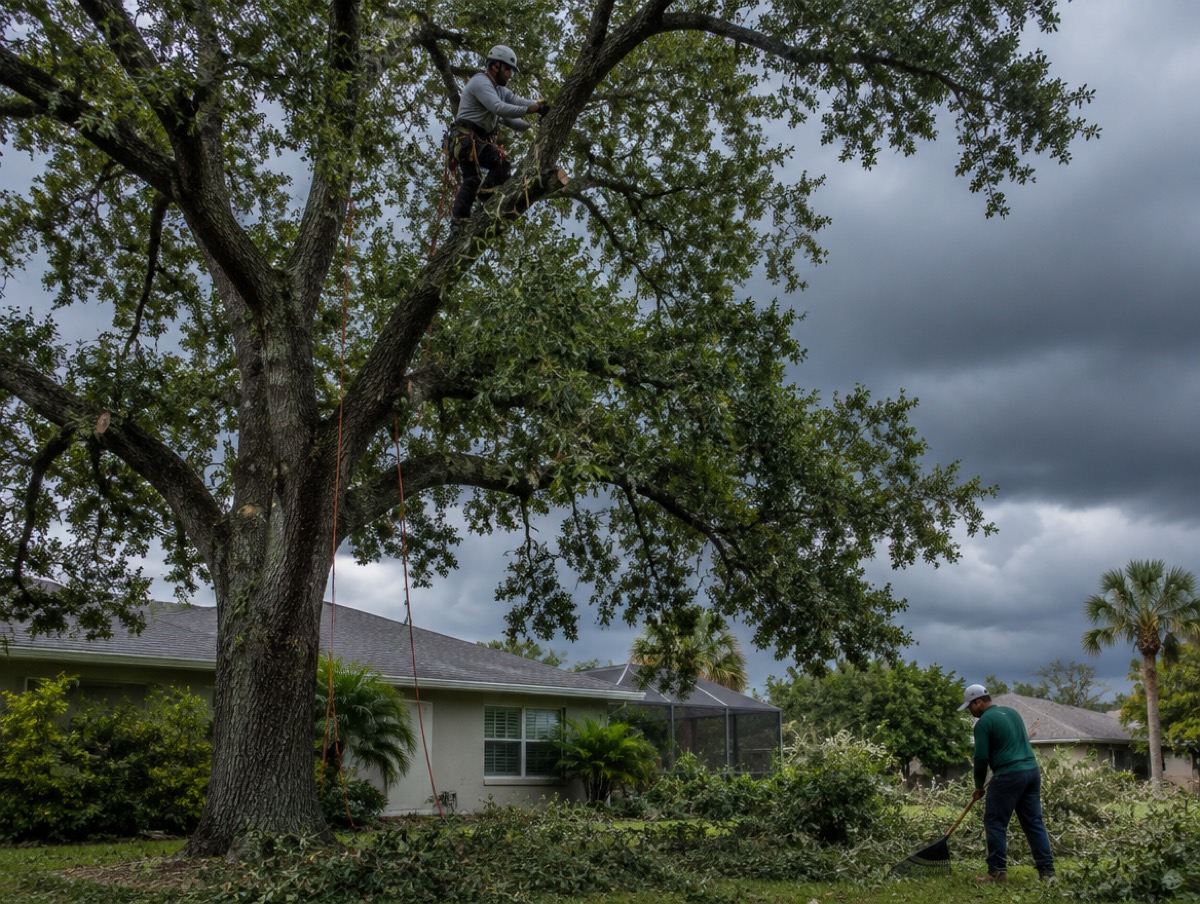
Atlantic hurricane season runs June 1 to November 30. More than 97% of tropical cyclone activity falls inside that window, and the peak runs August through October (NOAA Hurricane Research Division). For tree work, the useful window is spring and early summer.
Once a named storm shows up in the forecast cone, everybody calls at once. Crews fill up, and a trim that would have been easy to book in April may not happen at all.
Which Brevard trees hold up, and which don't
UF/IFAS rated how tree species held up after hurricanes. On the Southeastern Coastal Plain, live oak, sand live oak and the cabbage (sabal) palm rated highest. Slash pine came in medium-low. Water oak, laurel oak and sand pine rated lowest, and the queen palm rated lowest in the tropical and subtropical table (UF/IFAS FR173). The same publication is plain that no tree is wind-proof.
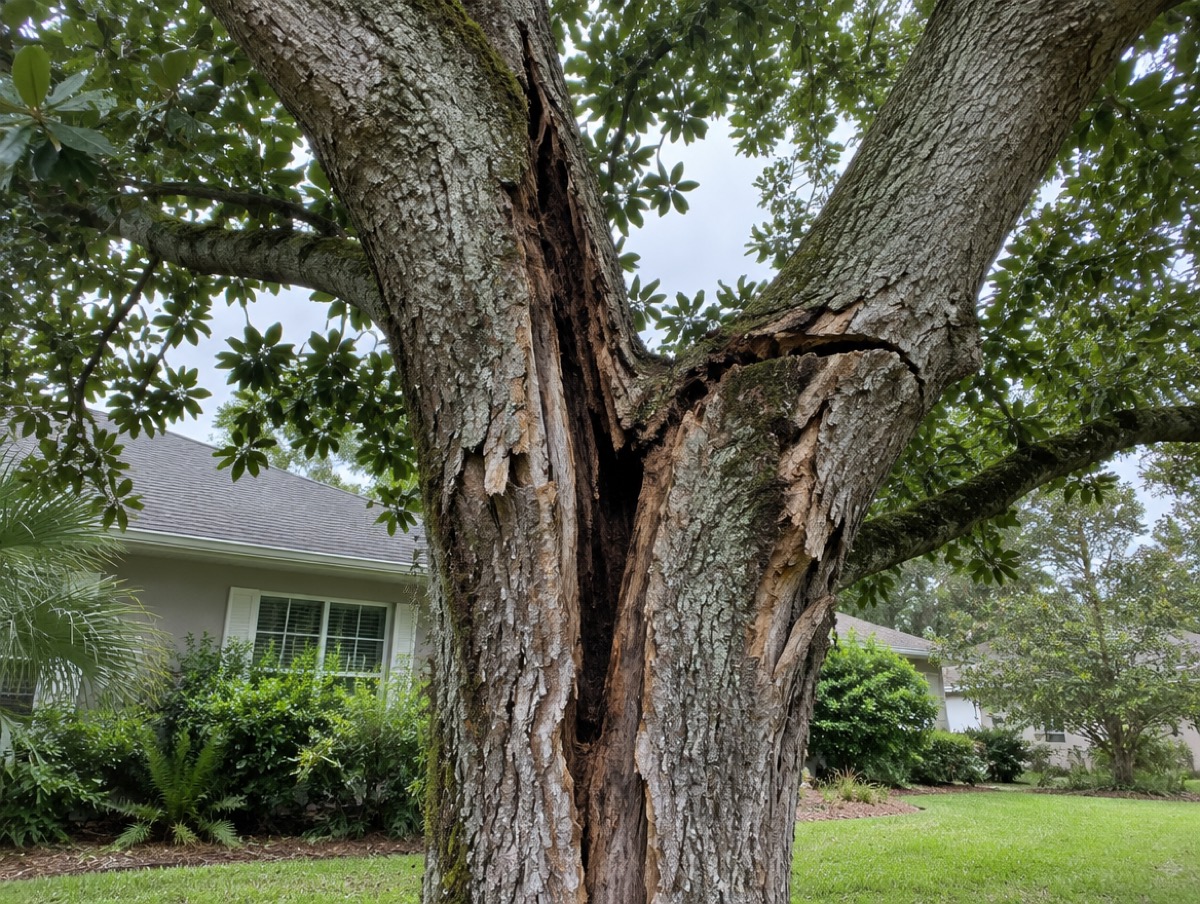
Laurel oak deserves a hard look before every season. UF/IFAS gives it a life span of roughly 50 to 70 years and notes that its trunk and large limbs often hollow from decay (UF/IFAS ST549). If yours was already big when you moved in, have it checked.
What pre-season work covers
Storm prep is mostly about reducing what can fall and catching what might fail. A visit usually covers some of this:
- Dead limbs and broken stubs taken out of the canopy
- Limbs over the roof, pool cage and driveway shortened or lifted
- Trees with cavities, cracks or a new lean looked over, and removal discussed where it's warranted
- Coconuts and heavy queen palm fruit stalks cut before the wind takes them
- A look at which way each big tree would fall, and what's in the way
Leave the palms their green fronds
Stripping a palm to a few fronds before a storm is a common request. Green fronds are the palm's leaves, so it's worth questioning. The palm trimming page explains what to ask for instead.
Permits take time, so start early
A removal that needs a permit can't wait for the cone. Palm Bay, for example, lists a 7-day review for tree removal applications (Palm Bay Code s. 175.014), and the county and other cities have their own steps.
If a tree poses an unacceptable risk, section 163.045 of the Florida Statutes lets the owner of a single-family home prune or remove it without local permits or fees, provided they hold signed documentation from an ISA Certified Arborist or a Florida licensed landscape architect (F.S. 163.045). The risk assessment page explains how that works and what it leaves out.
After the storm passes
Wait for the wind to drop before going out to look, and keep clear of anything touching a wire. Then work from the ground and take photos. In unincorporated Brevard the county code calls for photos, rough measurements and the distance to structures before an emergency removal (Brevard County Code s. 62-4334), and the same photos help with an insurer and with getting an accurate price anywhere in the county.
Storm cleanup jobs tend to fall into a few types:
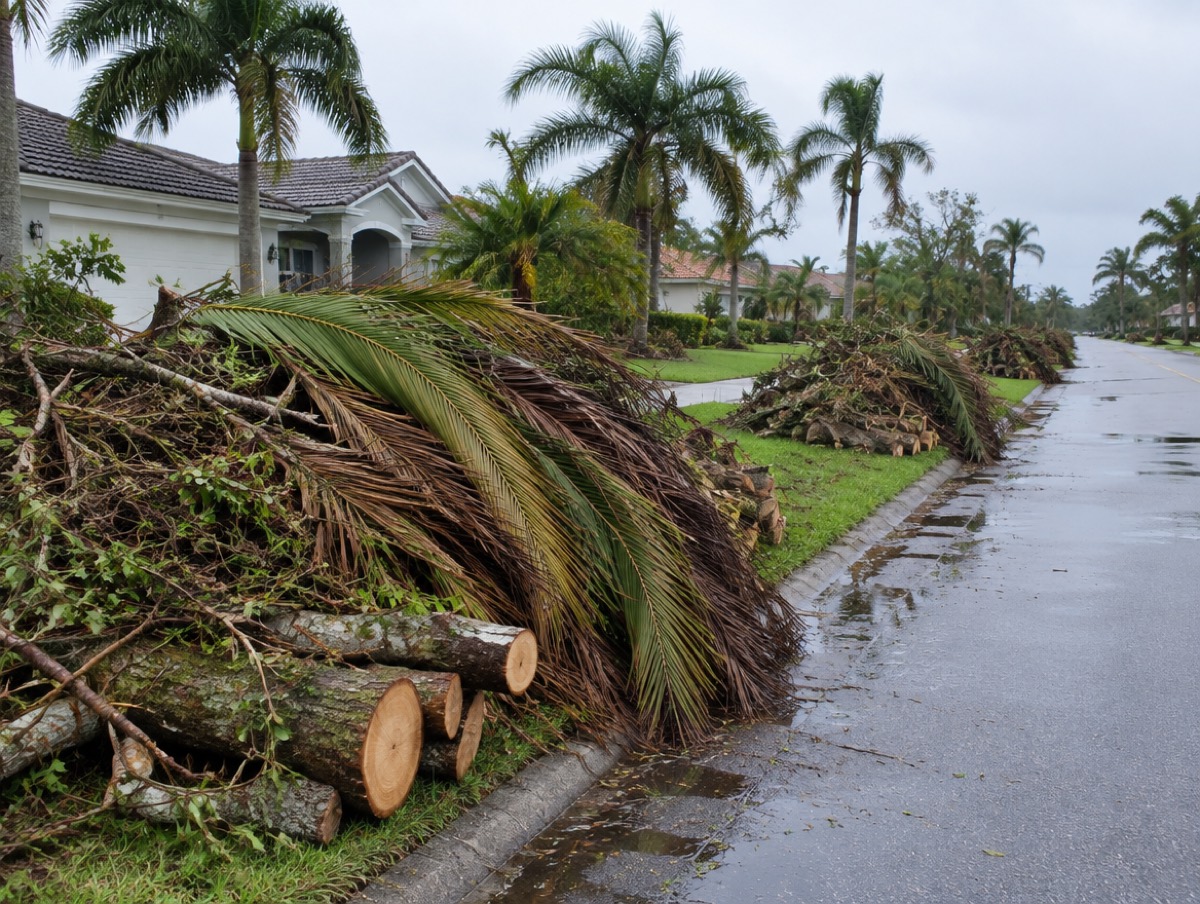
- Trees down across the yard, driveway or fence, to be cut up and hauled or stacked
- Hangers, meaning broken limbs caught in the canopy that can drop without warning
- Split trunks, and trees that now lean toward the house
- Uprooted trees with the root plate tipped up out of the sand
- Stumps and root plates left behind once the trunk is gone
Deadlines and debris
Satellite Beach adds a deadline: owners there must remove dead or severely diseased or damaged trees and shrubs within 60 days (Satellite Beach Code, Chapter 30). For a tree on the house, go to emergency tree service. For the piles afterward, see debris hauling and the storm debris guide.
Questions people ask
Should I trim or remove trees before hurricane season?
If a tree is dead, decaying or leaning toward the house, deal with it before June. Routine deadwood removal and roof clearance are worth doing in spring too, while crews still have room in their schedules.
Which trees hold up best in hurricanes?
In UF/IFAS ratings for the Southeastern Coastal Plain, live oak, sand live oak and sabal palm came out on top, and laurel oak and sand pine at the bottom. Queen palm rated lowest in the tropical and subtropical group (UF/IFAS FR173).
What should a pre-season tree check cover?
Dead wood, limbs over the roof and pool cage, any tree with a cavity, crack or new lean, and palms carrying heavy fruit or coconuts. With a big old laurel oak, ask specifically about decay, since UF/IFAS notes the species often hollows out (UF/IFAS ST549).
Is it too late to trim once a storm is coming?
Often, yes. Crews are booked, and a fresh pile of branches in the yard gives the wind one more thing to throw. If a dead limb hangs right over the roof, call anyway and ask.
Can I get a tree removed under section 163.045 before the season?
If it's on a single-family home lot and an ISA Certified Arborist or a Florida licensed landscape architect signs documentation that it poses an unacceptable risk, the local permit rules don't apply to it (F.S. 163.045). Vacant lots, multifamily and commercial property aren't covered.
Sources
- NOAA Hurricane Research Division FAQ
- UF/IFAS, Wind and Trees: Lessons Learned from Hurricanes (FR173)
- UF/IFAS, Laurel oak fact sheet (ST549)
- Palm Bay Code of Ordinances s. 175.014
- Florida Statutes s. 163.045, tree removal on residential property
- Brevard County Code s. 62-4334, exemptions
- Satellite Beach Code, Chapter 30, trees