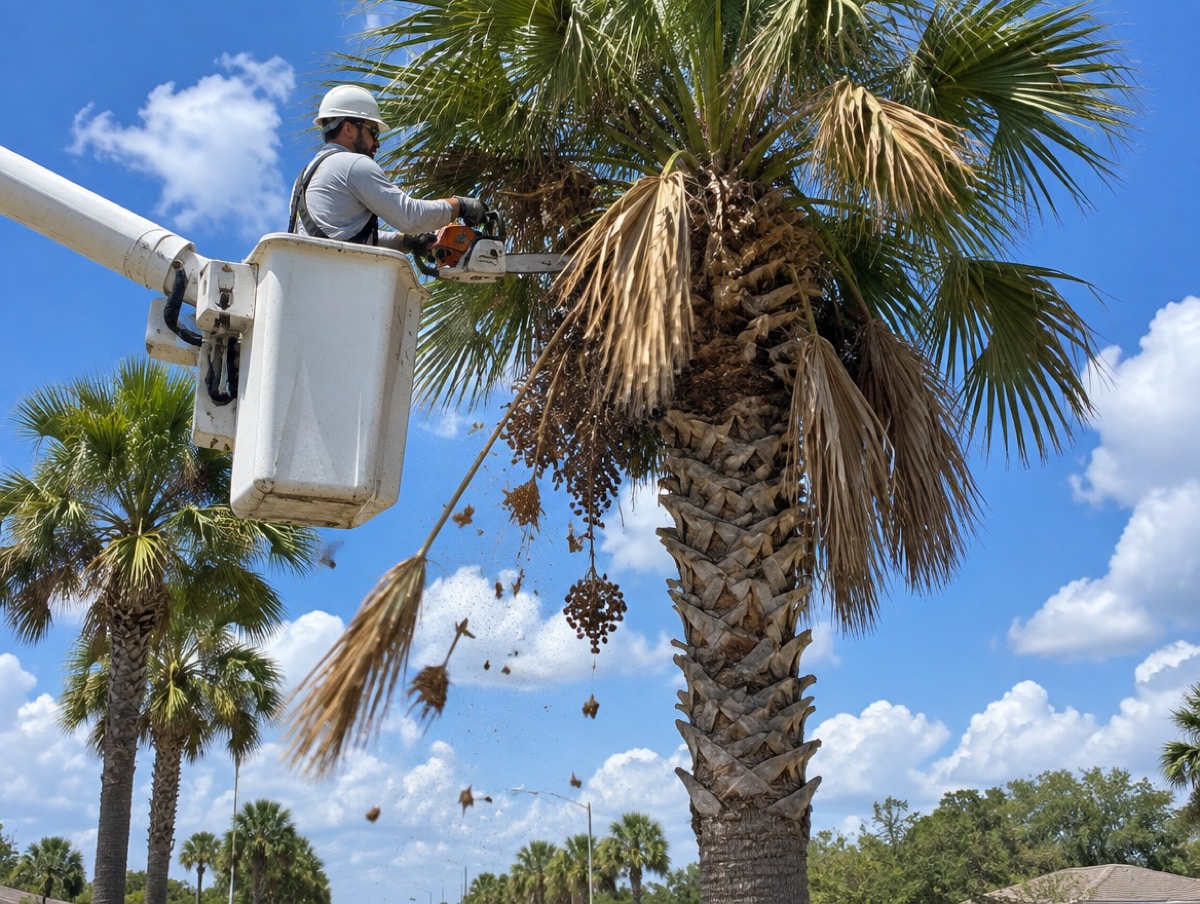
The palms in a Brevard yard
The sabal palm, also called the cabbage palm, is Florida's state tree (F.S. 15.031), and it grows all over the county, from pastures in Mims to the dune line at Indialantic. It's also tough in wind. In UF/IFAS ratings of how trees held up in hurricanes on the Southeastern Coastal Plain, the cabbage palm sat alongside live oak and sand live oak in the highest group (UF/IFAS FR173).
The queen palm is the opposite case. It rated lowest for wind in the tropical and subtropical table of the same study. UF/IFAS also flags it as potentially invasive and says to use it with caution: one fruit cluster can weigh more than 100 pounds and carry over 1,000 seeds, and the seedlings come up where nobody wants them (UF/IFAS ST609).
Coconut, royal, Washingtonia and date palms turn up as well. Tell us the species if you know it, or send a photo and let the crew sort it out.
What a palm trim usually covers
Most palm work is cleanup. A typical visit covers some of this:
- Brown and hanging fronds cut close to the trunk
- Flower and seed stalks taken off before the fruit lands on the deck or the car
- Coconuts cleared from palms over driveways, walkways and play areas
- Old frond bases, the boots, trimmed or peeled for a cleaner trunk if you like that look
- Fronds cut back where they rub the roof, the gutter or the pool screen
Leave the green fronds
Some crews still offer to strip a palm down to a few upright fronds before storm season, a look people call the hurricane cut. Ask what the crew plans to leave and why before you agree. Green fronds are the palm's leaves, and every one cut is food the palm no longer makes. Brown and hanging fronds are fair game.
Ask, too, how the climber gets up the trunk. A lift or a ladder works on a lot of palms, and it's a fair thing to request on a palm you plan to keep for years.
For more on keeping palms healthy between trims, see the palm care guide.
Taking a palm down
A palm has no big limbs to rig, so removal is often simpler than an oak of the same height. Where there's room, the trunk is dropped whole. Over a roof or a pool cage it comes down in sections, and the stump gets ground like any other (see stump grinding).
Permit rules reach palms in some places. Palm Bay requires a permit to remove any palm with 4.5 feet or more of clear wood on the trunk, unless one of the code's exceptions applies (Palm Bay Code s. 175.014). Titusville's protected-tree classes leave palms out (Titusville LDR, tree protection definitions), though the city's general removal rules still apply (Titusville LDR s. 30-39). In Melbourne, s. 9.272 exempts properties with an existing one-, two- or three-family home from the city's tree removal permit (Melbourne LDC s. 9.272), and the Melbourne page covers the rest of the city's rules. For other cities, check the permit guide.
Sick palms are the hard call. A crew can tell you a palm looks bad, but naming a palm disease often takes more than a look from the ground. If removal is recommended because of disease, ask what they saw, and consider checking with the UF/IFAS Extension office for Brevard County before you decide.
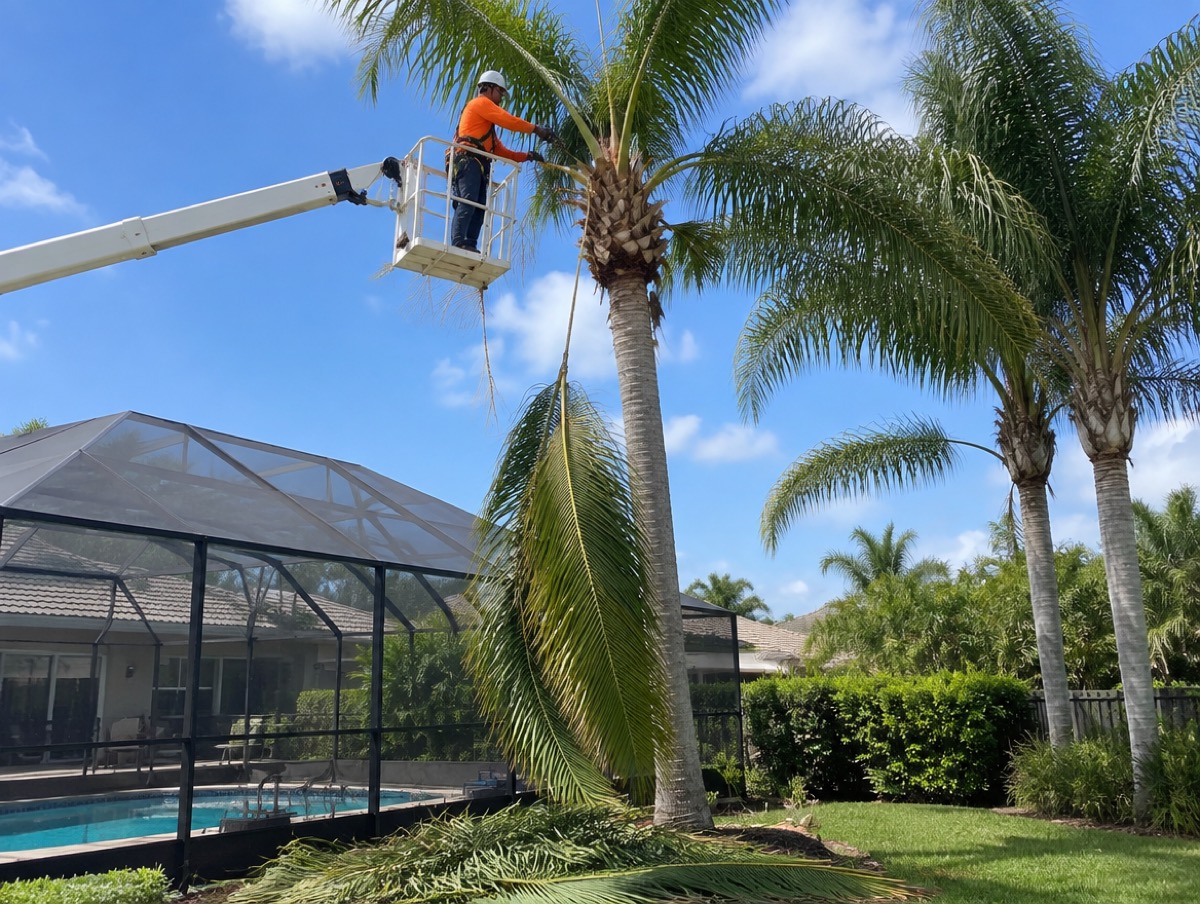
Palms near wires
Palms grow straight up, and some of them grow right into the service line to the house. If fronds touch a line, keep ladders and people away from it. FPL says only specially trained line-clearing professionals should work around power lines and asks customers to report trees touching lines (FPL tree FAQs). The crew can trim everything else once the utility has dealt with the line.
Questions people ask
How often should palm trees be trimmed?
When there are brown or hanging fronds, or seed stalks you don't want on the ground. Species and taste set the schedule more than the calendar does. A queen palm next to the pool may need its fruit stalks cut more often than a sabal in the side yard.
Is a hurricane cut bad for palms?
It takes green fronds, which are the leaves the palm feeds itself with, so it's worth questioning before you agree to one. Ask the crew what they plan to leave. Brown and hanging fronds can come off without that trade-off.
Do I need a permit to remove a palm tree?
It depends on the city. Palm Bay requires one for a palm with 4.5 feet or more of clear trunk, with exceptions (Palm Bay Code s. 175.014). Rules elsewhere differ, so check the permit guide for your address.
Should I remove my queen palm?
That's your call. UF/IFAS rates it potentially invasive, notes its heavy fruit clusters and seedlings (UF/IFAS ST609), and its hurricane study put it lowest for wind in the tropical and subtropical group (UF/IFAS FR173). Plenty of people keep theirs and simply cut the fruit stalks.
What about fronds touching a power line?
Leave those to the utility. Report the palm to your electric utility, since FPL says only specially trained line-clearing professionals should work around power lines (FPL tree FAQs).
Sources
- Florida Statutes s. 15.031, state tree
- UF/IFAS, Wind and Trees: Lessons Learned from Hurricanes (FR173)
- UF/IFAS, Queen palm fact sheet (ST609)
- Palm Bay Code of Ordinances s. 175.014
- Titusville LDR, tree protection definitions
- Titusville LDR s. 30-39, tree removal permits
- Melbourne LDC s. 9.272, tree removal permits
- FPL, Trees and power lines FAQ