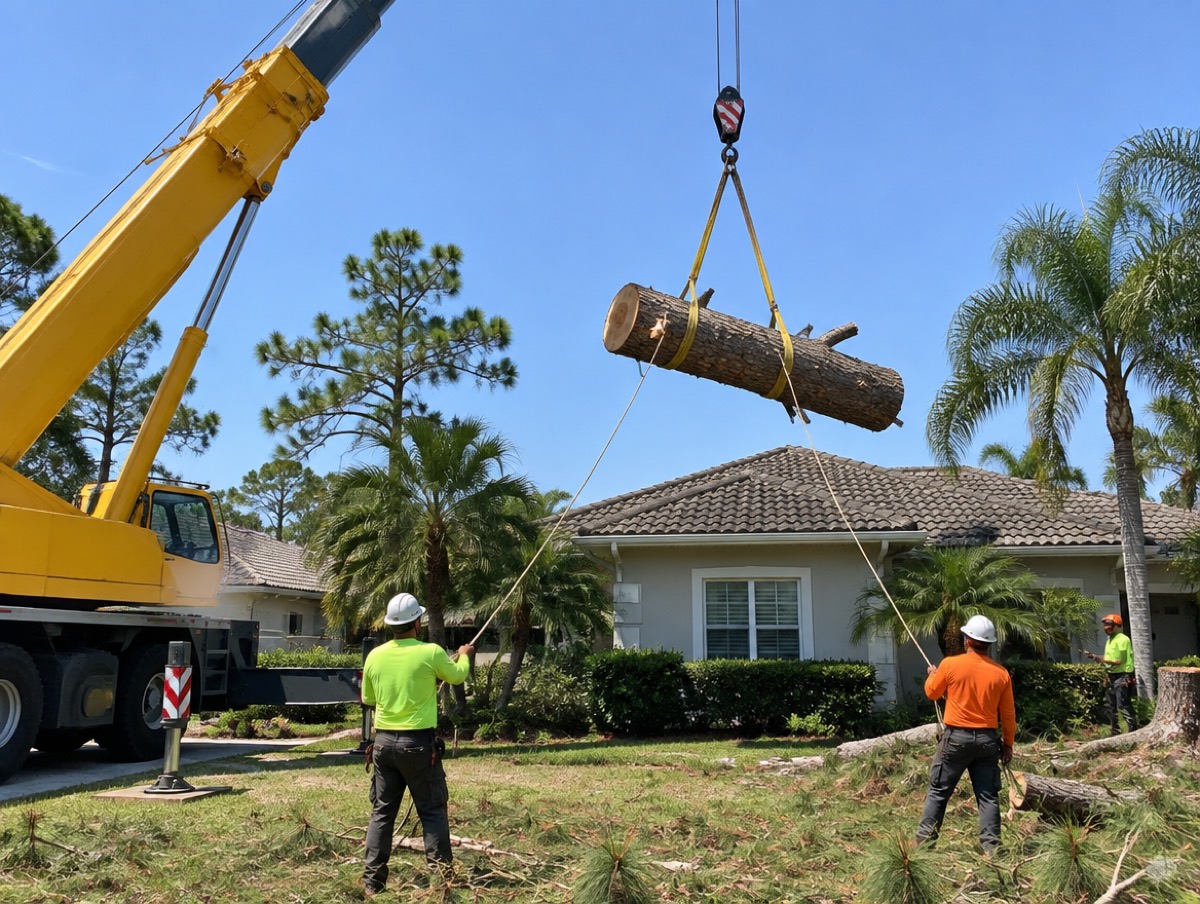
When a crane is the safer way
Most removals don't need one. A crane comes in when the usual methods would put the house, the climber or both at risk:
- No open ground to drop the tree or lower pieces into
- Limbs and trunk sections that would have to come down over a tile roof or pool screen
- A tree too decayed for a climber to tie into safely
- A storm-damaged tree lying on the house, where every cut shifts the weight
- A backyard tree on a lot where the only way out is over the roof
Why decay changes the plan
Decay is the reason that surprises people. UF/IFAS notes that laurel oak trunks and big limbs often hollow out as the tree ages (UF/IFAS ST549), and a hollow trunk is a poor anchor for a climber's rope. With a crane, each piece is held before it's cut, so nothing falls on its own.
How a crane removal usually goes
The crane sets up on the street or the driveway, with its outriggers spread on pads. A climber or a bucket operator goes up, sets slings on a section, and makes the cut once the crane has the weight. The crane swings the piece over the house to the ground crew in the front yard or the street, where it's cut up, chipped and loaded.
It's a choreographed job. The pace depends on the crane's reach, the wind and how many pieces the tree breaks into, and cranes stand down when the wind picks up.
Brevard ground and crane setups
Sand is the local complication. Brevard's sandy soil can go soft after heavy rain, and a crane needs firm footing under every outrigger. Expect questions about recent rain, where the septic tank and drainfield sit, and whether the driveway is pavers, concrete or shell.
Overhead lines along the street limit where a crane can swing, so the lifts have to be planned around them. Anything involving the line itself belongs to the utility, since FPL says only specially trained line-clearing professionals should work around power lines (FPL tree FAQs).
On tight streets and cul-de-sacs, from older Melbourne neighborhoods to the narrow lots behind A1A in Melbourne Beach and Indialantic, the crane may block the road for a while. Ask whether the setup needs anything from the city or your HOA, and give the neighbors a heads-up.
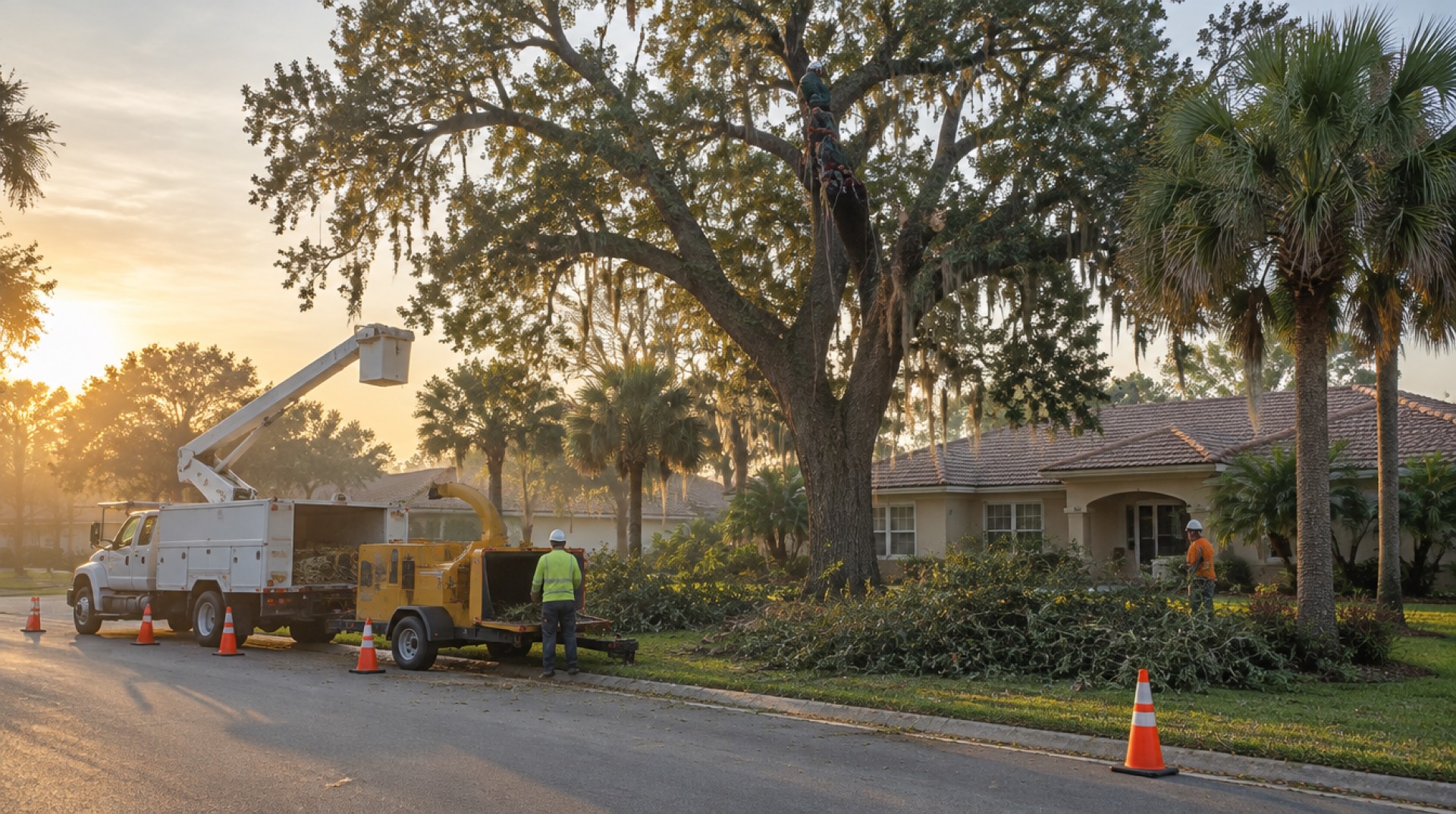
Questions to ask before a crane job
Get the answers in writing. A crane day is costly to reschedule, so the details matter.
- Where will the crane set up, and what goes under the outriggers?
- Is the crane the crew's own, or a rented crane with its own operator?
- How will the driveway, curb and lawn be protected, and who pays if something cracks?
- Where do the pieces land, and how do they leave the property?
- What happens to the schedule if it's too windy on the day?
- Does the price include the stump and the cleanup?
Permits still apply
A crane changes the method, not the paperwork. If the tree needs a permit where you live, it needs one whether it comes down by rope or by crane. Start with the permit guide. If the tree is a documented hazard on a single-family lot, read how F.S. 163.045 works on the risk assessment page.
Questions people ask
Is crane tree removal more expensive?
The crane adds a line to the bill. It can also shorten the job and protect the roof, so compare quotes that use the same method. The cost guide lists what moves the price.
Will a crane damage my driveway or lawn?
It can if nothing protects them. Ask what goes under the outriggers and the trucks, and who pays for a cracked paver or a rutted lawn.
Can a crane reach a tree in the backyard?
Often, if it can set up close enough on the street or the driveway. Reach depends on the crane's size and the weight of each piece. A photo from the street and one from the backyard help the crew judge it.
Do I need to be home during a crane removal?
It helps to be there at the start, to move cars and point out septic lids and sprinkler heads. After that, plenty of people leave the crew to it.
How long does a crane removal take?
That depends on the tree and the number of lifts. Many are finished in a day, cleanup included, though big or storm-damaged trees can run longer.