Inside Cocoa city limits
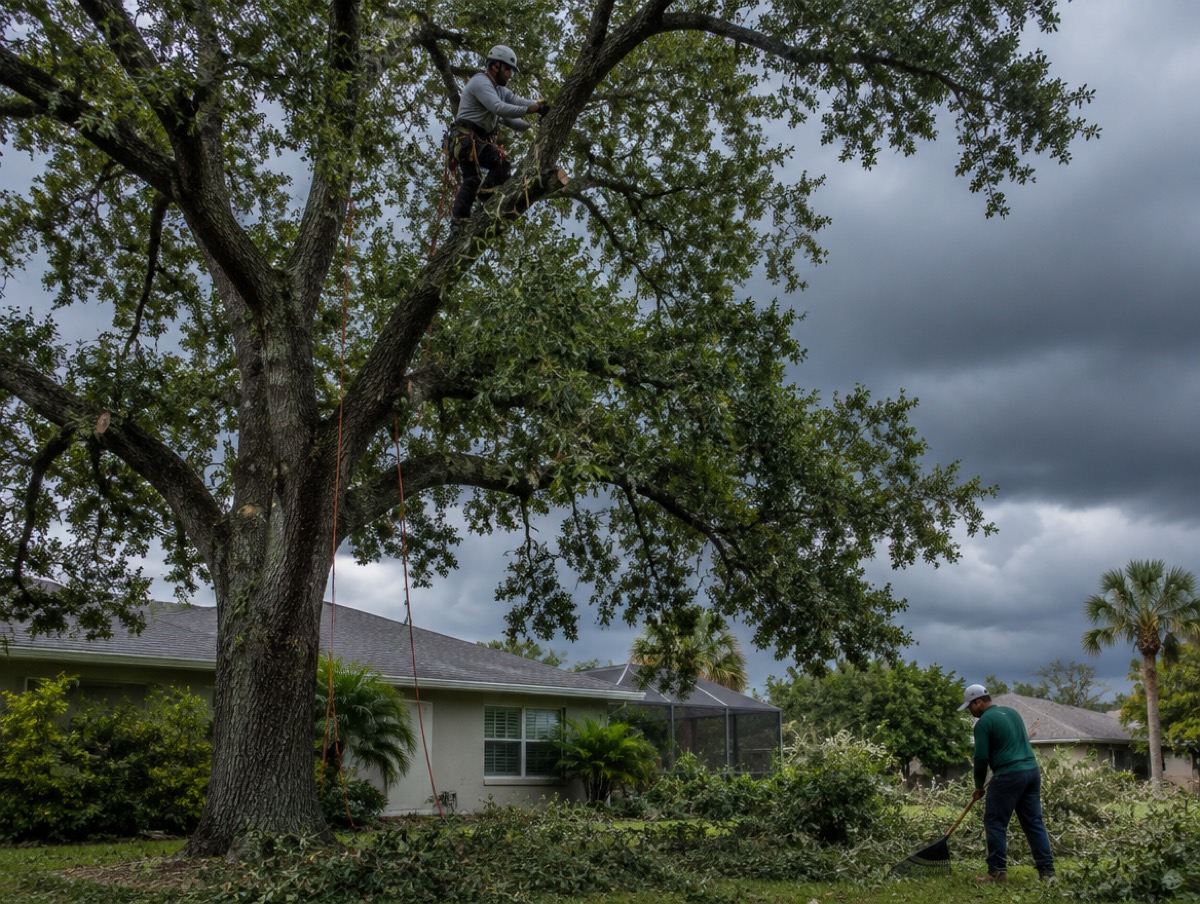
Cocoa's tree protection rules apply to vacant and undeveloped property, open space on developed property, and rights-of-way. They don't apply to single-family or duplex lots (Cocoa Code, Appendix A, Art. XIII, s. 22). Where the rules do apply, no tree comes out without a tree removal permit and no land is cleared without a land clearing permit.
The size thresholds are low. Cocoa regulates any tree with a dbh of 6 inches or more, and a non-exempt hardwood at 24 inches or more counts as a specimen. On a wooded vacant lot, that's most of what's growing there.
How Cocoa reads the dangerous-tree law
Florida's F.S. 163.045 stops a local government from requiring a permit, fee or replanting to remove a tree on residential property when the owner has documentation that the tree poses an unacceptable risk. That documentation comes from an ISA Certified Arborist or a Florida licensed landscape architect after an on-site assessment.
Cocoa applies the exemption narrowly. Its code says residential property for this purpose does not include multifamily property, HOA or condo common areas, vacant land zoned residential or mixed-use, public rights-of-way, or land under a development agreement, landscape easement or conservation easement (Cocoa Code s. 22). A dying oak in an apartment complex's parking island doesn't qualify.
Cocoa West and Sharpes follow county code
Step outside the city line and the rules change. Cocoa West and Sharpes are unincorporated, so Brevard County's Chapter 62 tree protection rules govern there. On the mainland the county's protected-tree line is 10 inches dbh for hardwoods and 14 inches for pines and other softwoods (Brevard County Code s. 62-4332).
House lots get relief. A single-family lot of up to 1.25 acres with a certificate of occupancy skips the county's canopy and preservation requirements, provided the minimum landscaping is kept (s. 62-4334). Larger or vacant parcels, like some of the land along U.S. 1 in Sharpes, are where a county permit becomes more likely.
Trees along the river
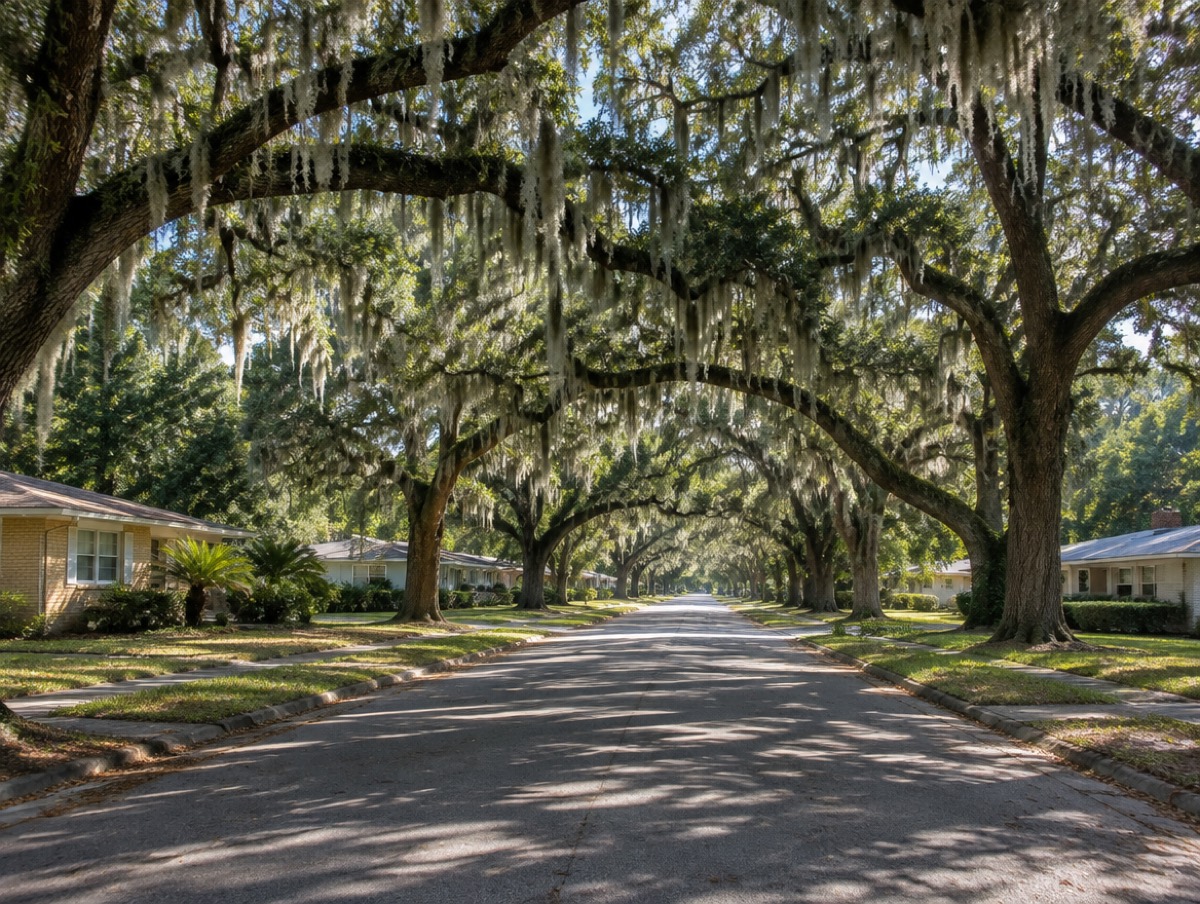
Cocoa's riverfront and the streets near the Village lean on oaks for shade. In the UF/IFAS hurricane study, water oak and laurel oak both rated lowest for wind resistance, while live oak rated among the highest (UF/IFAS FR173). If you're not sure which oak you have, the crew you're matched with can tell you on site, and that answer shapes whether trimming or removal makes more sense.
Local rules worth knowing
Cocoa's tree and land clearing permit rules cover vacant and undeveloped property, open space on developed property and rights-of-way, not single-family or duplex lots.
For the 163.045 exemption, Cocoa excludes multifamily property, HOA or condo common areas, vacant residential land, rights-of-way and land under development agreements or easements.
In unincorporated areas such as Cocoa West and Sharpes, the county protects mainland hardwoods from 10 inches dbh and softwoods from 14 inches.
Source: Brevard County Code s. 62-4332
Questions people ask
Do I need a permit to remove a tree at my house in Cocoa?
Cocoa's tree protection section doesn't apply to single-family or duplex lots. It covers vacant land, open space on developed property and rights-of-way. If your situation is unusual, confirm with the city.
I live in Cocoa West. Which rules apply?
County rules, because Cocoa West is unincorporated. A single-family lot of 1.25 acres or less with a certificate of occupancy is exempt from the county's canopy and preservation requirements under s. 62-4334.
Does the dangerous-tree exemption cover my condo's trees?
Not in Cocoa. The city's code leaves multifamily property and HOA or condo common areas out of the residential property that F.S. 163.045 covers, so the association goes through the city's process.
Is a 6-inch tree really regulated?
On vacant land, open space or a right-of-way in Cocoa, yes. The city regulates trees from 6 inches dbh.