Two cities, two codes
Cocoa Beach and Cape Canaveral each write their own tree rules, and this page doesn't restate them. Call the city's building or planning office with your address before a removal, especially on an oceanfront lot.
One state law reaches both. F.S. 163.045 bars local governments from requiring a permit or replanting for a tree on residential property that an ISA Certified Arborist or Florida licensed landscape architect has documented as an unacceptable risk. The statute defines residential property as a single-family detached building on a lot used for single-family purposes, and it doesn't cover multifamily buildings or commercial sites. On a coastline lined with condos, that leaves a lot of trees outside it.
Palms that take the wind
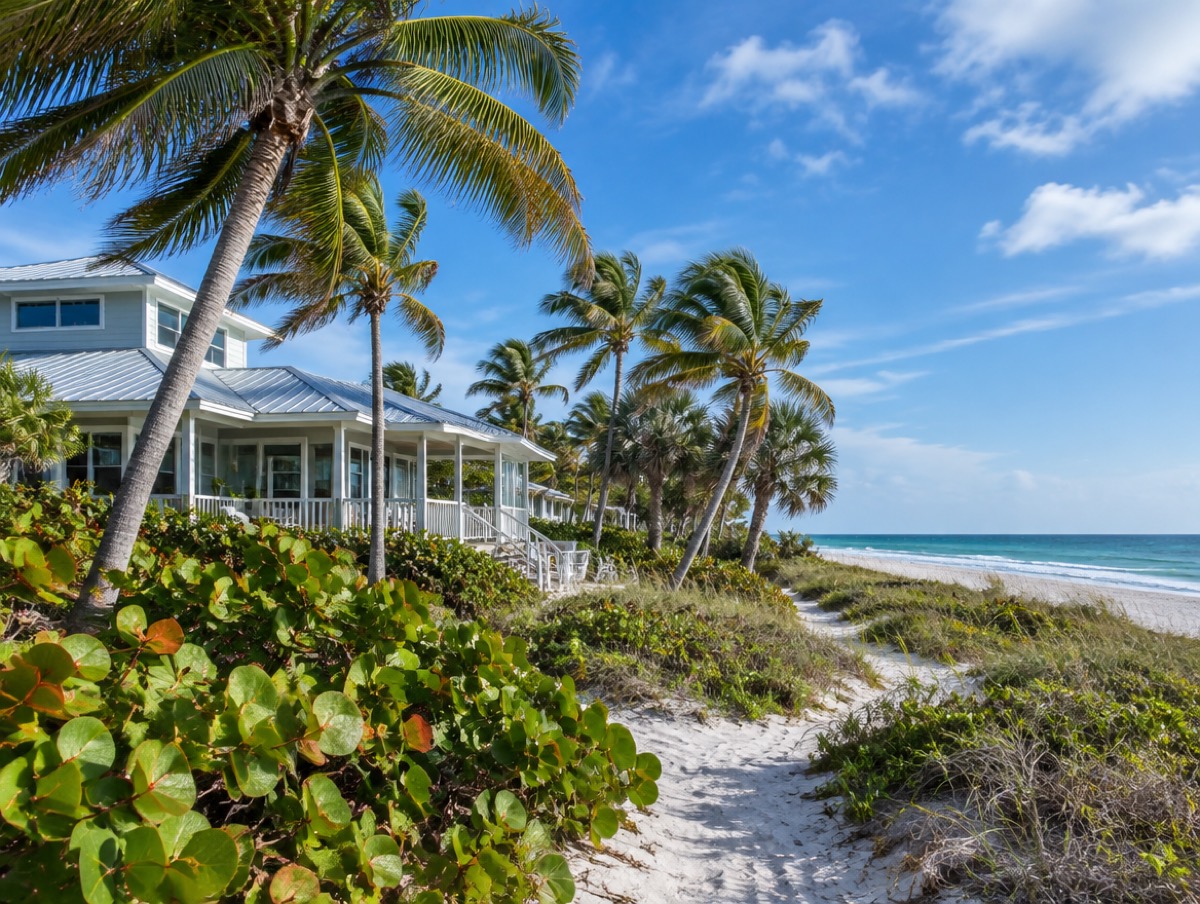
The cabbage palm, or sabal, is Florida's state tree (F.S. 15.031), and it holds up on the beach. The UF/IFAS hurricane study rated it among the most wind-resistant trees on the Southeastern Coastal Plain (FR173).
Queen palms are another story. UF/IFAS assessed the queen palm as potentially invasive, and its fruit clusters can top 100 pounds and carry more than a thousand seeds that sprout unwanted seedlings (UF/IFAS ST609). One dropping fruit on a pool deck is a reasonable candidate for removal.
Mangroves on the Banana River side
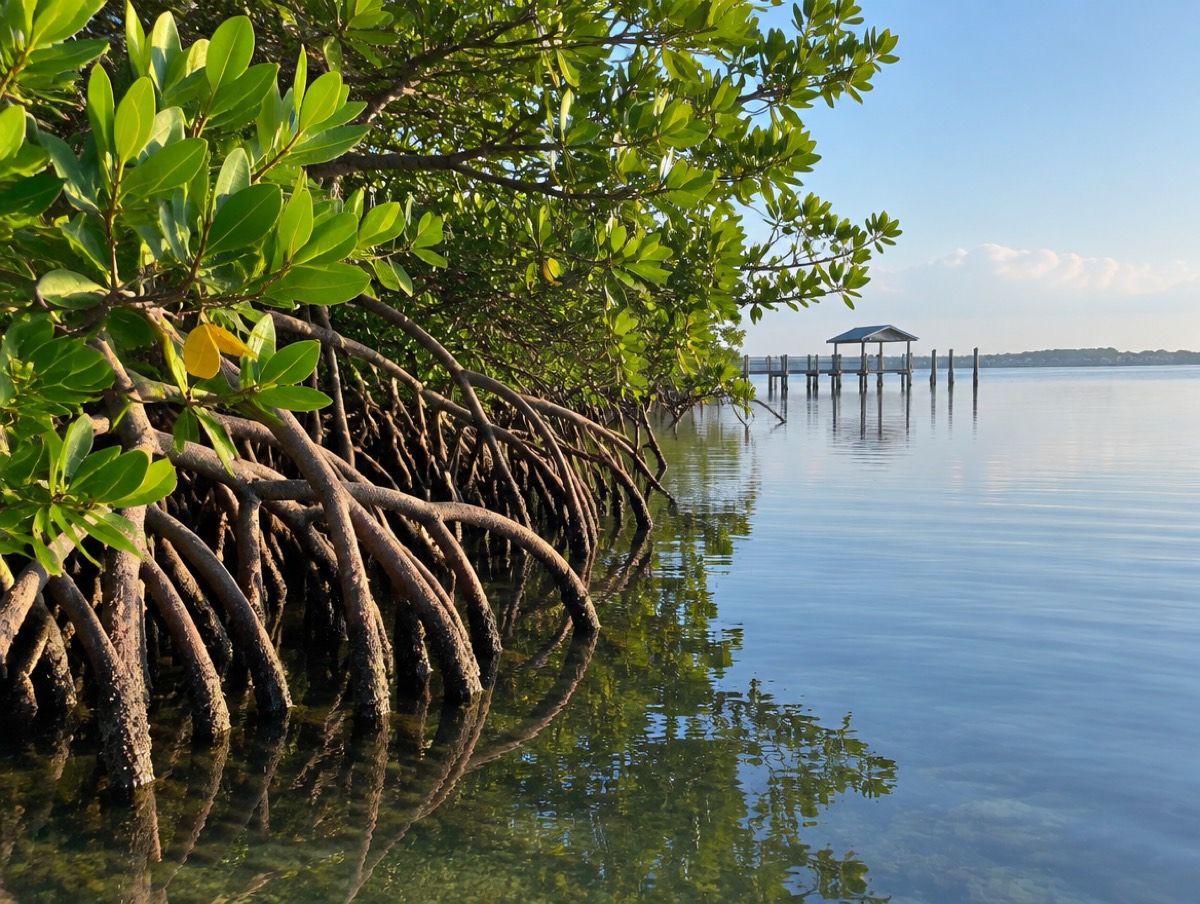
Many canal and riverfront lots on the west side of both cities have mangroves at the water's edge. They fall under the Mangrove Trimming and Preservation Act, and the state's dangerous-tree law expressly doesn't apply to them (F.S. 403.9329; F.S. 163.045).
Under the act, a professional mangrove trimmer who signs a notice of intent to use the general permit has to conduct or supervise the trimming. This site doesn't arrange mangrove work. For the rest of the yard, tell us what you need.
Tight lots, cranes and pool cages
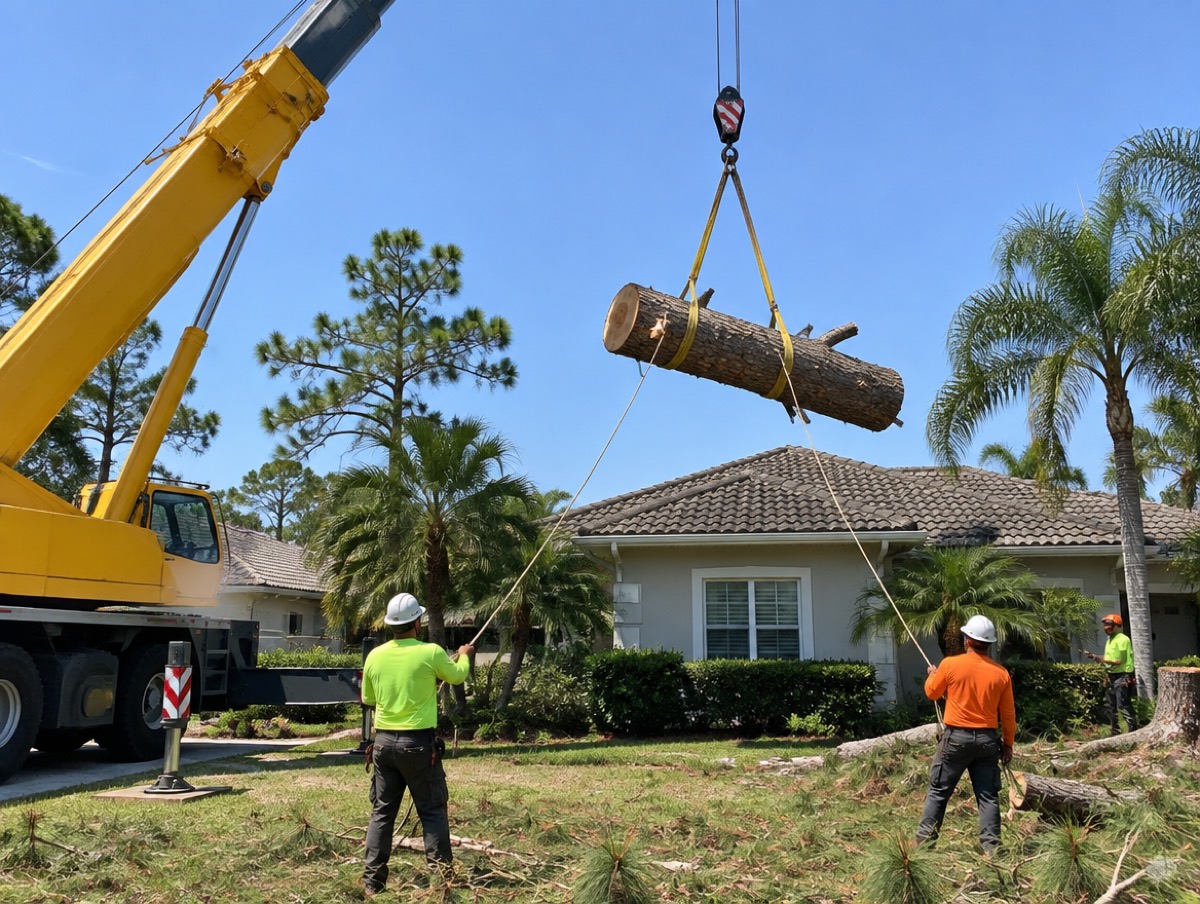
Beachside lots leave little room to drop a tree, so a removal here usually comes down in sections, lowered piece by piece. When even that won't work, a crane can lift sections over the house. The crane removal page explains when that makes sense. Mention the pool enclosure, the side-yard width and any overhead wires when you call, so the crew you're matched with arrives ready.
Local rules worth knowing
The F.S. 163.045 hazard-tree exemption covers single-family detached homes only. Vacant lots, multifamily properties and commercial sites are not covered.
Source: Florida Statutes s. 163.045
Under the Mangrove Trimming and Preservation Act, a professional mangrove trimmer who signs a general-permit notice must conduct or supervise the trimming.
Source: Florida Statutes s. 403.9329
The sabal palm, also called the cabbage palm, is Florida's state tree.
Source: Florida Statutes s. 15.031
Questions people ask
Does the hazard-tree exemption apply to my condo?
No. F.S. 163.045 covers a single-family detached home on a lot used for single-family purposes. Multifamily properties are outside it, so the condo association works through the city's own process.
Can someone trim the mangroves behind my house?
Only under the Mangrove Trimming and Preservation Act, and work under the general permit has to be done or supervised by a professional mangrove trimmer. This site doesn't match mangrove jobs.
Which palms hold up best in a hurricane?
In the UF/IFAS hurricane study, cabbage palms rated among the most wind-resistant, and queen palms rated lowest in the tropical and subtropical group. No tree is wind-proof.
Is Cape Canaveral under Cocoa Beach's rules?
No. They're separate cities, each with its own code. Call the one your address is in.