The 6-inch rule
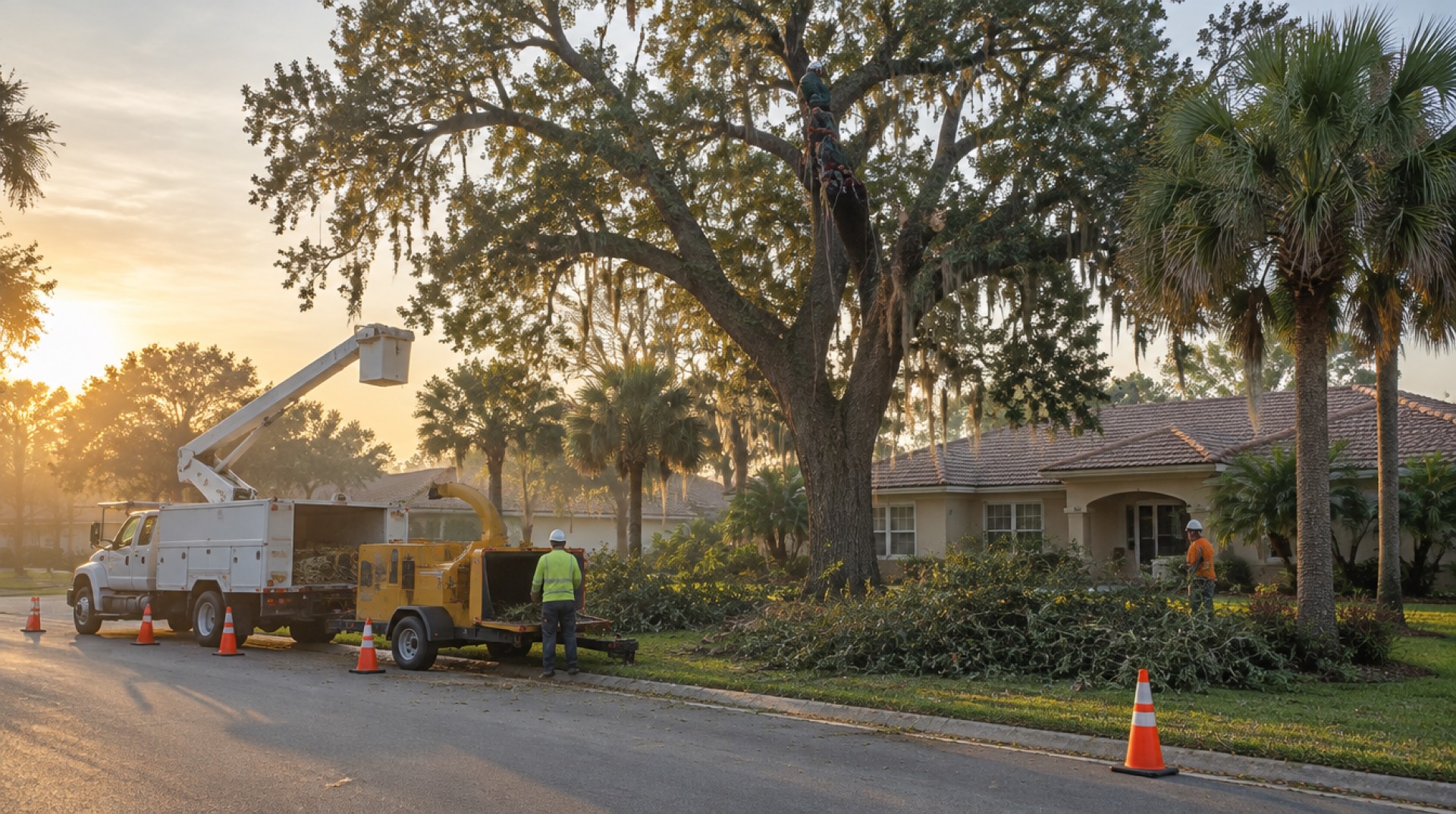
Palm Bay rewrote its tree code in 2024 (Ord. 2024-33). Section 175.014 requires a permit to remove or damage any tree measuring 6 inches or more in diameter at breast height (dbh), and any palm with 4.5 feet or more of clear wood (Palm Bay Code s. 175.014). On a typical Port Malabar lot, that takes in nearly every pine and oak big enough to worry about.
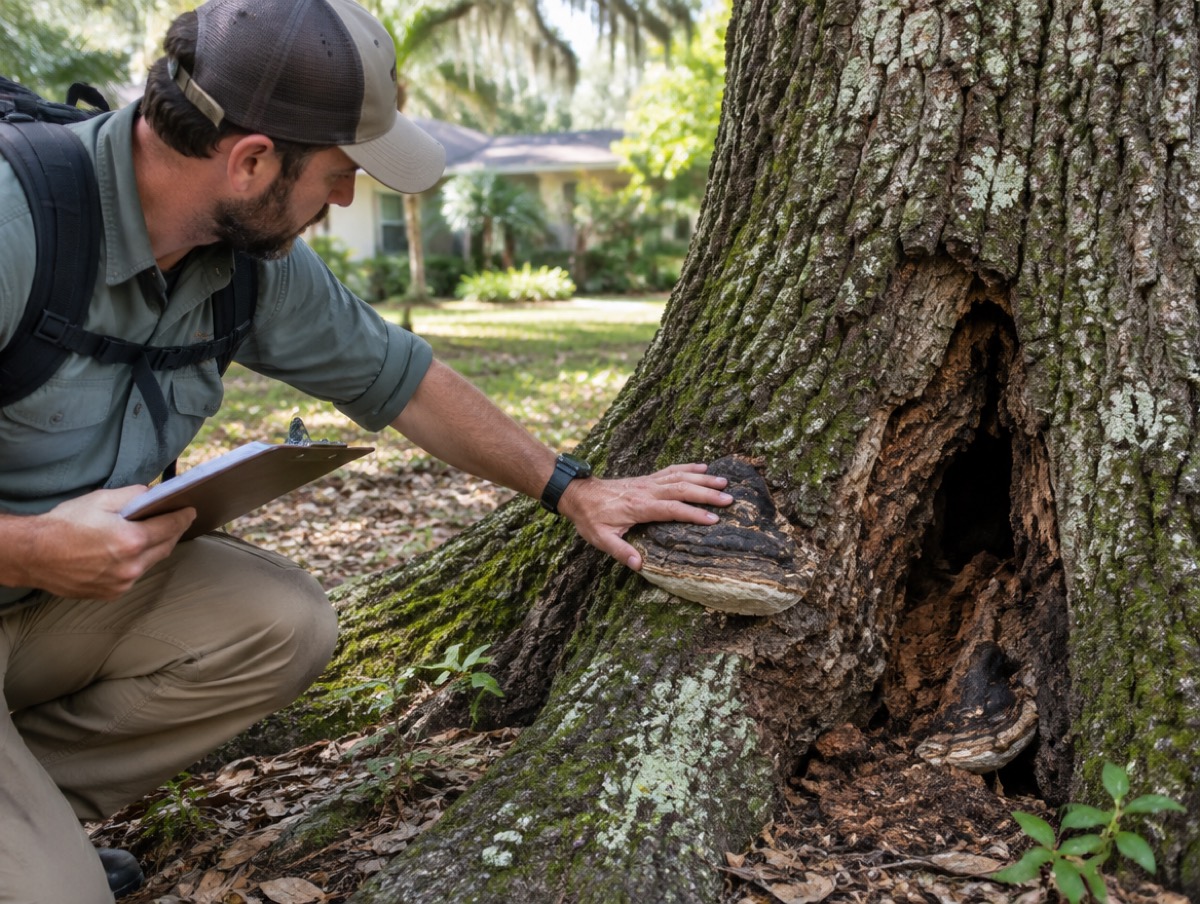
There's no blanket pass for an existing house. A developed single- or two-family lot is exempt only when the tree meets F.S. 163.045 and the owner gives the city that documentation. Under the statute, the documentation comes from an ISA Certified Arborist or a Florida licensed landscape architect who assessed the tree on site and found an unacceptable risk.
What the application asks for
The code sets review at 7 days, and the city may ask for certified arborist documentation when a hazard is in question (s. 175.014). Expect to provide:
- The application fee (ask the city for the current amount)
- Your recorded deed
- A signed hold-harmless agreement
- An authorization letter, if someone other than the owner applies
- A site sketch showing the dbh and species of every tree on the parcel, marked keep or remove
Reasons the city accepts
Section 175.003 lists the grounds Palm Bay accepts for a removal (Palm Bay Code s. 175.003). Read them before you apply, because the application should point to one.
- A hazard to people or property
- A Class I invasive species as identified by the Florida Invasive Species Council. Brazilian pepper and melaleuca are both Category I (UF/IFAS, Brazilian peppertree; UF/IFAS, melaleuca)
- Disease, a fallen tree, or a tree weakened by age, storm or fire
- Construction needs, including an equipment access path up to 10 feet wide
- An alternative site plan that keeps protected or specimen trees
What happens when someone skips the permit
The penalties make cutting first a bad bet. The owner, contractor or agent gets a stop-work order or violation notice, then has one week to apply at double the fee (s. 175.014). A restoration plan can require one native canopy tree, at least 5 inches dbh and 15 feet tall, for every 6 inches of specimen trees removed.
Scrub-jays and new-home lots
The U.S. Fish and Wildlife Service has published notices of Endangered Species Act incidental take permit applications, with habitat conservation plans, for clearing single-family lots in Palm Bay. One 2006 notice covered applications for two Palm Bay home lots totaling about 0.48 acre of scrub-jay foraging habitat, within 438 feet of where the birds had been seen (Federal Register, May 11, 2006).
FWC lists the Florida scrub-jay as federally threatened and places it in sand pine and xeric oak scrub on old sandy ridges (FWC scrub-jay profile). A lot with bright white sand and knee-high scrubby oaks deserves a call to the city before any clearing. For small-lot work once the paperwork is sorted, see lot clearing.
Local rules worth knowing
A permit is required to remove or damage any tree 6 inches dbh or larger, or any palm with 4.5 feet or more of clear wood. Land clearing on a residential lot under 1 acre also needs a permit.
After a violation, the owner, contractor or agent has 1 week to apply at double the fee.
Source: Palm Bay Code s. 175.014
A 2006 federal notice covered scrub-jay incidental take permit applications for two Palm Bay home lots, about 0.48 acre in total.
Source: Federal Register, May 11, 2006
Questions people ask
Do I need a permit to cut down a tree at my Palm Bay house?
Usually, if the trunk measures 6 inches or more at breast height, or it's a palm with 4.5 feet of clear wood. The home-lot exception needs F.S. 163.045 documentation handed to the city. Read s. 175.014 or ask the city's permitting staff.
A storm just dropped a pine across my fence. Do I wait for a permit?
An immediate threat is exempt once verbal authorization is given on site. After a declared public emergency the city may suspend the tree rules, so check what it has announced. For a tree that's down but not threatening anything, s. 175.003 lists fallen and storm-weakened trees among the accepted reasons for a permit. Take photos before cleanup either way.
Are the pines or the oaks the bigger storm worry?
Both deserve a look. In the UF/IFAS hurricane study, slash pine rated medium-low for wind resistance, laurel oak and sand pine rated lowest, and live oak rated highest (FR173).
Sources
- City of Palm Bay Code s. 175.014 (Ord. 2024-33)
- City of Palm Bay Code s. 175.003
- Florida Statutes s. 163.045
- UF/IFAS, Brazilian peppertree
- UF/IFAS, Melaleuca
- Federal Register, May 11, 2006, Palm Bay scrub-jay incidental take permit applications
- FWC, Florida scrub-jay profile
- UF/IFAS, Wind and Trees: Lessons Learned from Hurricanes (FR173)