Last reviewed October 7, 2026. General information, not legal or professional advice. Check the linked sources for the current rules.
If a tree is touching a line right now
Stay back and keep everyone else back. FPL asks customers to report a tree that is touching lines and sparking, or creating another hazard, right away (FPL tree trimming FAQ). Use FPL's outage reporting line or website. This site can't help with a live line, and no tree crew should start work near one until the utility says it's safe.
FPL is direct about the rest: only specially trained line-clearing professionals should work around power lines, and homeowners should not try (FPL). That includes the branch that's only touching a little.
After a storm, Brevard County adds a rule for debris piles. Never stack them beside utility poles or transformers or under power lines, because hidden electrical hazards can injure or kill collection workers (Brevard County storm debris guidance).
What FPL handles
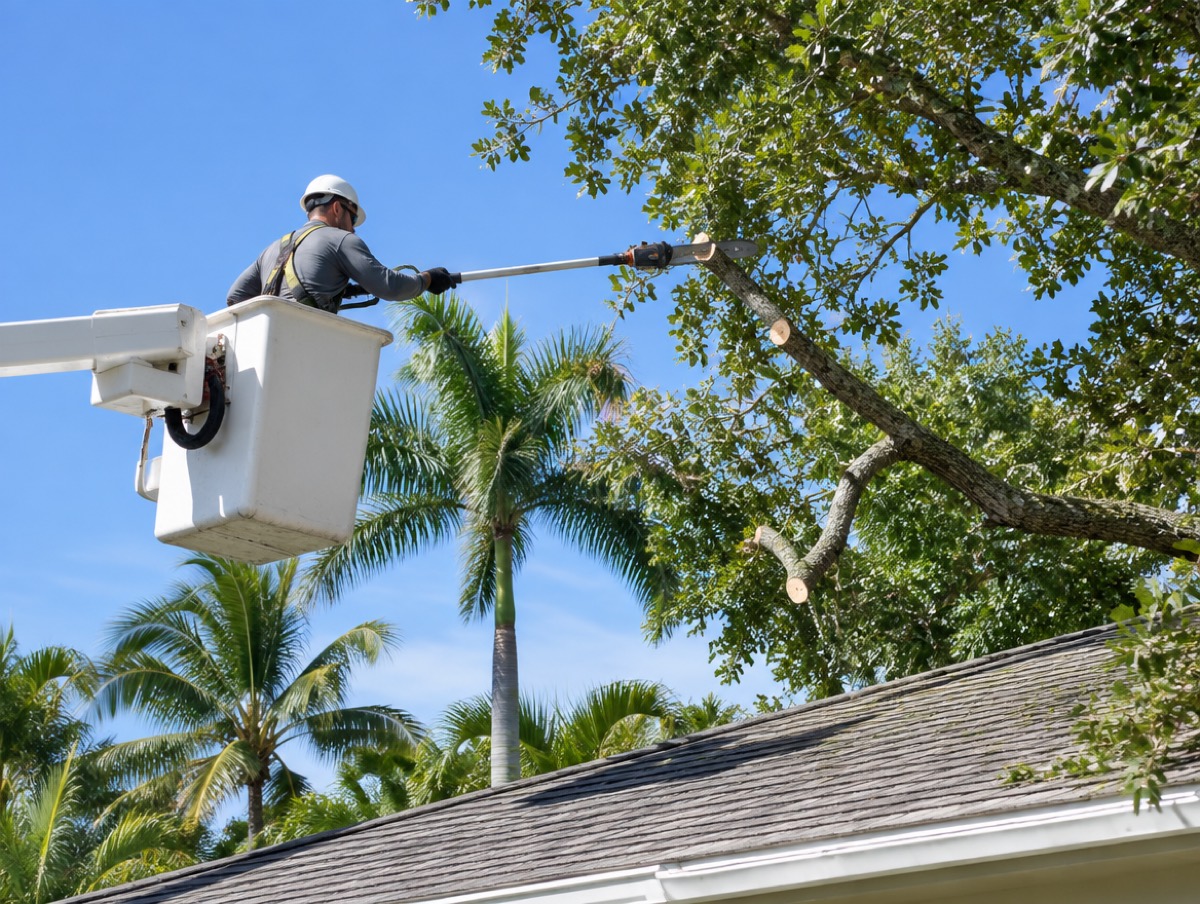
FPL says it uses only utility-qualified professional tree-trimming contractors to manage the trees and plants around its lines and equipment. On average, main lines, called feeders, are cleared about every three years, and neighborhood lines, called laterals, about every six (FPL).
Who hauls the debris depends on why the work happened. When FPL prunes on its scheduled line-clearing program, it removes the debris. After weather events, FPL says cuttings and tree debris are the responsibility of the property owner or the local government (FPL).
State law keeps cities and the county out of that work. Under F.S. 163.3209, no local government may require a permit for vegetation maintenance and tree pruning or trimming inside an established electric utility right-of-way.
Where an ordinary tree job fits
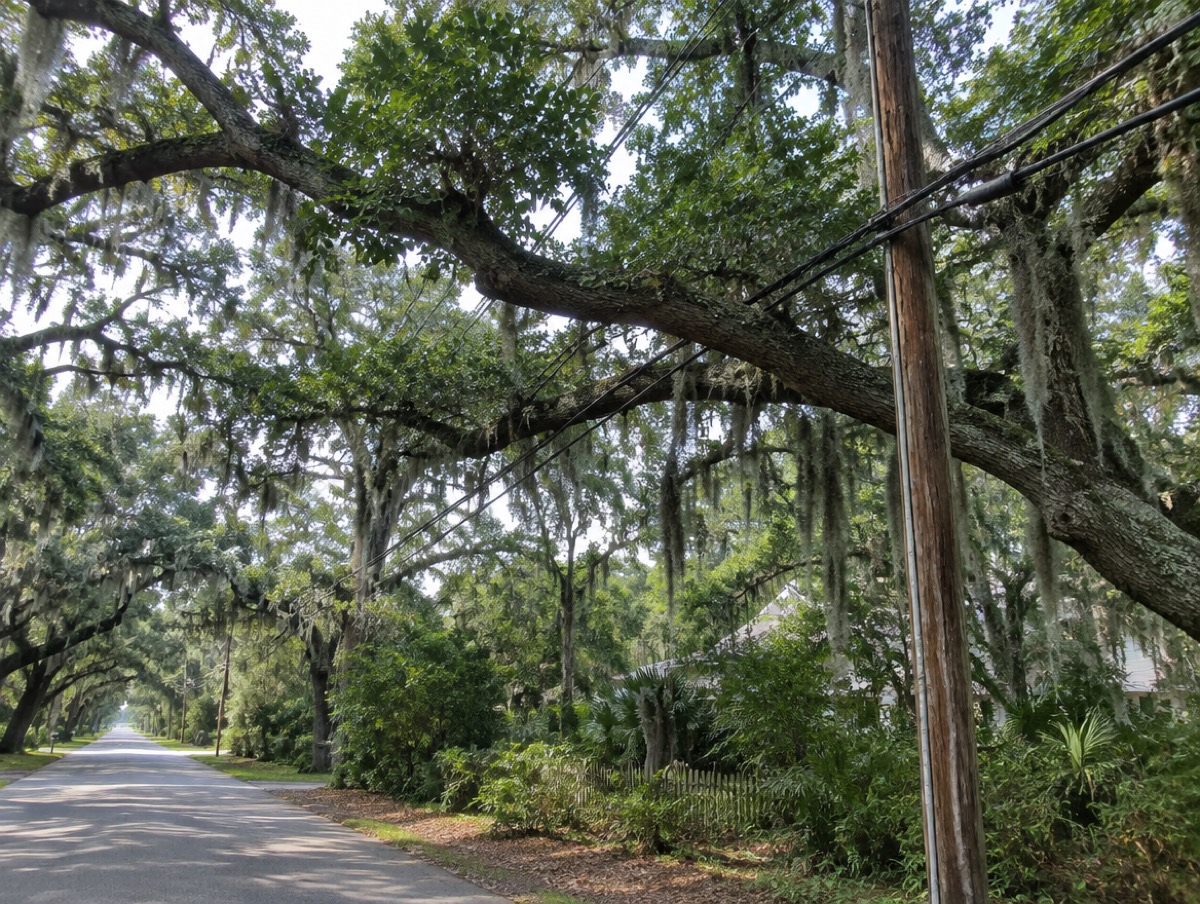
Plenty of tree work happens on lots with lines overhead and never comes close to them. Think of a laurel oak over the back fence with a line running along the rear easement, or a sabal palm beside the pole on a Rockledge corner lot. The crew you're matched with prices the parts of the job that are well away from the wires.
Anything within reach of an energized line is the utility's call. If a limb that has to come off hangs over or near a line, the crew should not cut it until FPL has made the line safe or dealt with the limb.
When you ask for a price, say where the lines are: the street side, the back easement or the service line to the house. One photo that shows the tree and the lines together answers most questions. If FPL isn't your electric company, ask your own utility the same things.
Buried lines and stump grinding
Power isn't only overhead. Sunshine 811 must be notified at least two full business days before digging, not counting the day of the call, weekends or holidays, and its definition of digging includes grading and moving earth (Sunshine 811 FAQs). A stump grinder cuts below the surface, and buried lines don't show on a lawn.
So before a stump comes out near a meter, a pole or a buried service, ask the crew you're matched with whether a locate request is in. Call 811 yourself if you're not sure. The stump grinding page covers the rest of that job.
Planting the next tree
FPL points homeowners to the Right Tree, Right Place section of its website for trees that fit the space near lines, and says to call 811 at least two days before digging a planting hole (FPL).
Wind resistance is worth a look too, since a failed tree near a line is the worst kind. UF/IFAS hurricane research rates laurel oak and sand pine lowest in the Southeastern Coastal Plain, and live oak, sand live oak and sabal palm highest. It also notes that no tree is wind-proof (UF/IFAS FR173).
What this site does and doesn't do
This site doesn't take line-clearing work. For everything else on the property, call or text (321) 604-1285 with a photo, and we match you with an independent local crew. The crew prices the job, and anything touching a line goes to the utility first.
Questions people ask
Who trims trees near power lines, FPL or me?
FPL manages trees around its lines and equipment with utility-qualified contractors, on a cycle of about three years for main lines and six for neighborhood lines (FPL). Homeowners shouldn't try it. Report hazards to FPL.
Can a regular tree service cut a limb off the line?
No. FPL says only specially trained line-clearing professionals should work around power lines (FPL). Report it to the utility and let it make the line safe first.
Will FPL haul away the branches?
After its scheduled line clearing, yes. After weather events, FPL says cuttings and debris are the property owner's or the local government's responsibility (FPL). The storm debris guide covers county pickup.
Does FPL need a city permit to trim in the right-of-way?
No local government may require one for vegetation maintenance inside an established electric utility right-of-way (F.S. 163.3209).
What about the line from the pole to my house?
Treat it like any other energized line. Ask FPL which lines on your property it maintains before anyone works near it.