Last reviewed October 7, 2026. General information, not legal or professional advice. Check the linked sources for the current rules.
Before a storm is on the map
Brevard's Solid Waste Management Department asks residents to prepare well ahead. Cut back trees and weak branches that touch the house, thin foliage so wind can flow through, and set trimmings out on the regular collection day, each piece no longer than 4 feet and no heavier than 50 pounds (Brevard County storm debris guidance).
Leaves, grass clippings, pine needles and shrub cuttings go in cans between 5 and 40 gallons. Bags of any kind, paper or plastic, are prohibited for yard waste (Brevard County).
Timing matters. Once a storm is expected to make landfall in the next 72 hours, the county says not to cut down trees or do major yard work, because collection before landfall isn't guaranteed. During a watch or warning, nothing goes to the curb, the landfill or a transfer facility, since services may be suspended and facilities may close early (Brevard County). If a tree needs to come down, the hurricane prep page covers doing it early.
Setting out storm debris
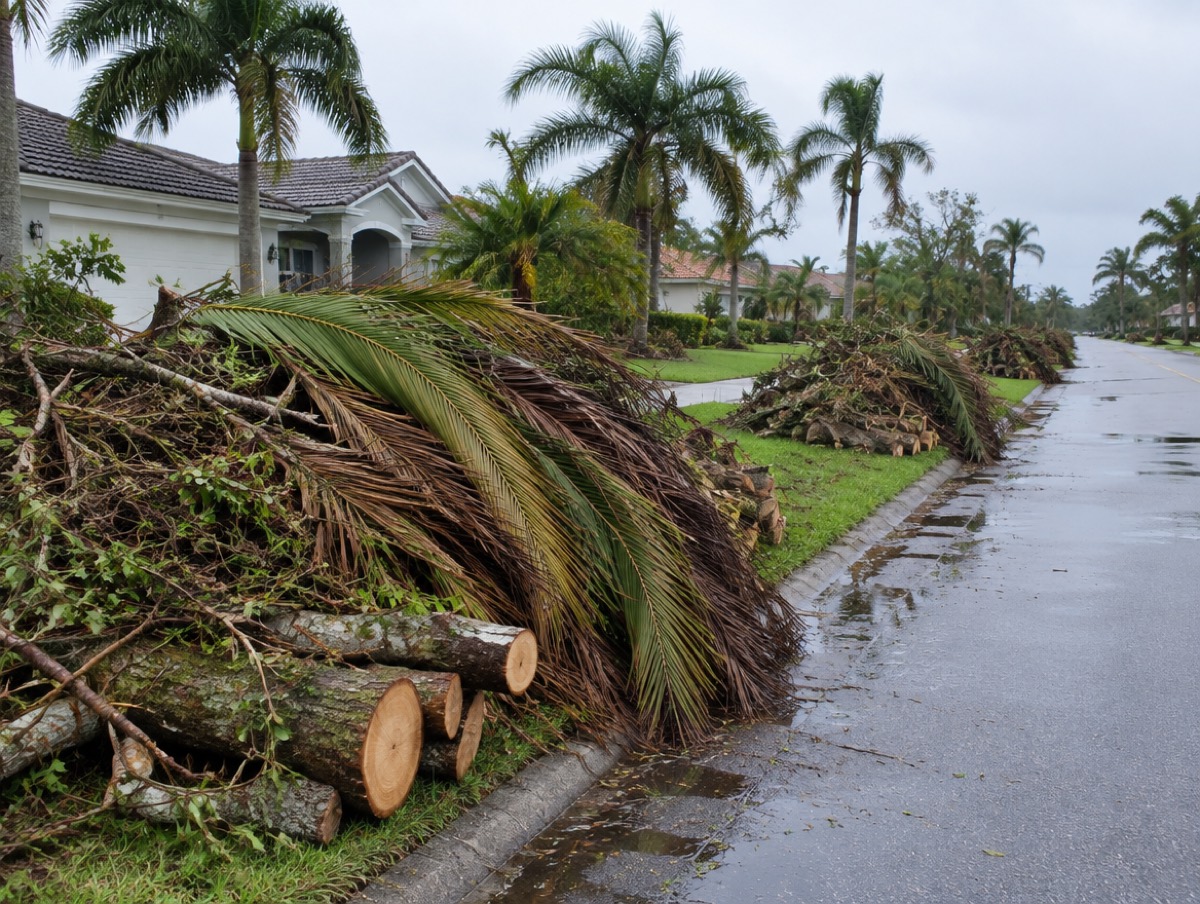
After the storm, the county asks for debris to go out like this (Brevard County):
- On the public right-of-way, never in the road.
- Sorted, with household garbage and recycling kept in the Waste Management carts.
- Loose leaves, clippings and pine needles in containers.
- Trees and limbs cut into 4-foot lengths.
- Drywall, shingles, siding, carpet, fencing and dock boards stacked neatly in their own pile.
- Appliances handled by calling Waste Management for a white goods pickup.
- Nothing beside utility poles or transformers, under power lines, on water meters or storm drains, by fire hydrants, near vehicles, or next to mailboxes or fences.
How collection runs
Collection is expected to start a few days after the storm passes. Depending on how bad it was, Waste Management or a separate disaster debris recovery contractor does the work. The county posts updates daily, with active collection zones and an interactive debris pickup map (Brevard County).
The first pass through the county picks up vegetative debris only. After a severe storm there may be a pass for construction and demolition debris and a second pass for vegetation. Regular garbage, recycling and containerized yard waste stay on the normal pre-storm schedule (Brevard County).
This is the county's program. If you live inside a city, check that city's storm notices as well, since the details can differ.
Paid tree work is a different pile
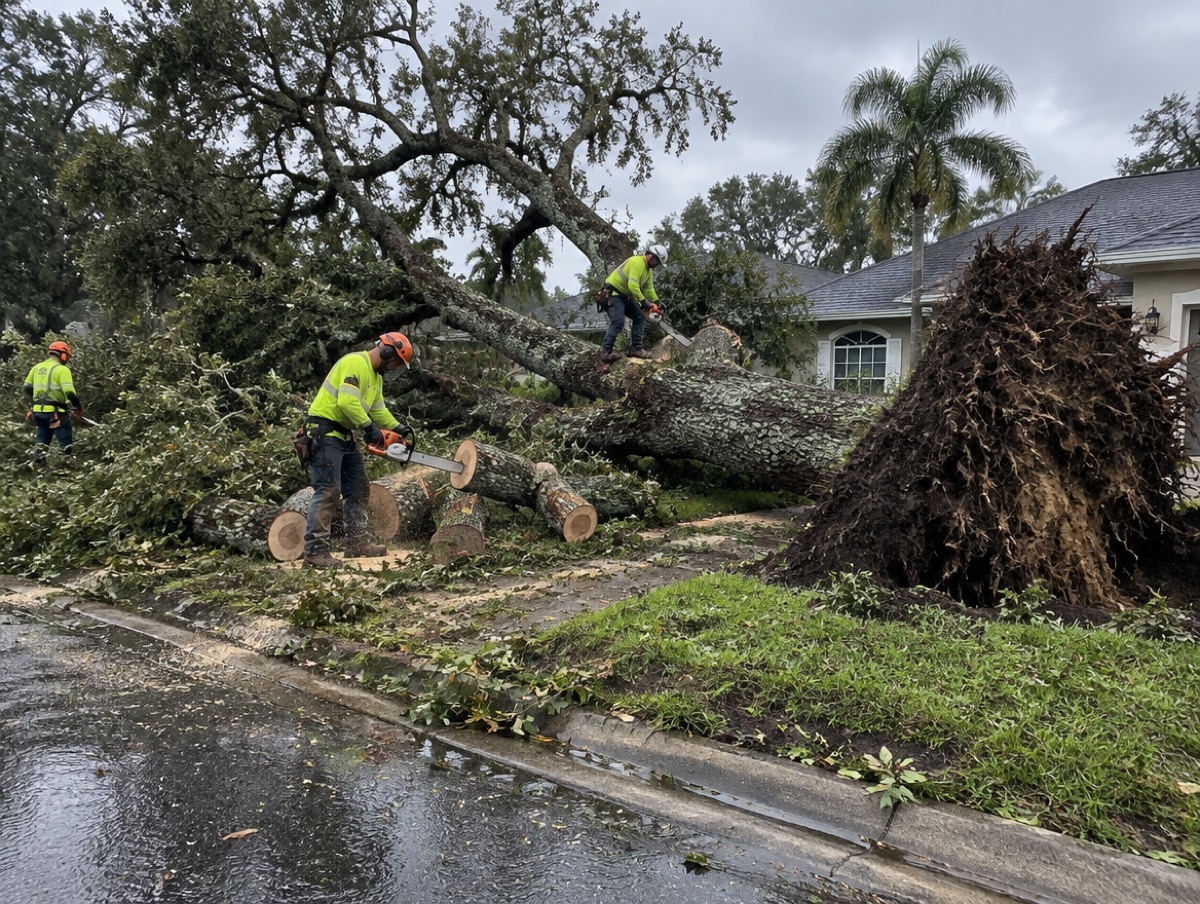
Here's the line that matters if you hire help. The county says contractors hired by a homeowner for tree trimming, fence repair or construction are responsible for hauling away all the yard waste, fencing and construction materials. It also says debris from named storms and from construction, remodeling or demolition isn't part of the normal collection your waste hauler provides (Brevard County).
So when a crew prices a storm removal, ask whether haul-away is in the number or listed separately. Leaving the chips on site for mulch shrinks the load. The debris hauling page and the cost guide cover how that part is usually priced.
Branches FPL cuts during storm restoration are a different case. After weather events, FPL says cuttings and tree debris are the responsibility of the property owner or the local government (FPL tree trimming FAQ).
Hauling it yourself
After a storm, the county says three sites are open 7:30 to 5:30, Monday through Saturday, for residents who want to bring storm debris to a permitted disposal facility at no charge: the Central Disposal Facility in Cocoa, the Sarno Road Landfill in Melbourne and the Mockingbird Way Mulching Facility in Titusville. Any temporary debris sites the county sets up are for its contractor only (Brevard County).
Check the county's storm updates for current hours before loading the truck. A trunk cut into 4-foot lengths rides easier than you'd think. A root ball with a slab of wet sand attached doesn't.
Burning storm debris
Burning is tightly limited. The Florida Forest Service allows yard waste to be burned without its authorization only if it fits in an 8-foot pile or a noncombustible container, sits 25 feet from your home, woods, brush or anything combustible, 150 feet from other occupied buildings and 50 feet from paved public roads, is lit after 9 a.m. and is out an hour before sunset. Local ordinances may still prohibit it (Florida Forest Service).
Brevard also has an automatic burn ban. Open burning is prohibited when the Keetch-Byram Drought Index average for the county reaches 500 or more, and the ban is suspended when it falls below 450 (Brevard County Code s. 50-1). For storm debris, the curb or a drop-off site is the simpler route.
Stumps, root balls and paperwork
The county's storm page doesn't address stumps or root balls. Before setting one at the curb, ask Brevard County Solid Waste or your city.
If the tree hit the house or might matter to an insurance claim, photograph it before cleanup starts. Brevard's code lists photos, rough measurements and the distance to structures for emergency removals (s. 62-4334(6)), and the fallen tree guide covers the insurance side. The Florida CFO also suggests asking your county, city or FEMA whether debris removal help is available after a disaster (Florida CFO).
For a downed tree that needs cutting up or removing, call or text (321) 604-1285. We match you with an independent local crew, and you decide whether haul-away is part of the job.
Questions people ask
Will the county pick up tree debris after a hurricane?
Brevard County collects storm debris that's set out the way it asks: on the right-of-way, sorted, limbs cut to 4 feet, nothing in the road or under lines. The first pass is vegetative debris only (Brevard County). If you live inside a city, check its notices too.
Will the county take debris left by a tree company I paid?
The county says contractors hired by a homeowner for tree trimming are responsible for hauling away the yard waste (Brevard County). Make sure haul-away is on the estimate.
Can I put leaves in bags?
No. The county prohibits bags of any kind for yard waste. Use a can between 5 and 40 gallons (Brevard County).
Can I take storm debris to a landfill myself?
Yes. After a storm the county lists the Central Disposal Facility in Cocoa, the Sarno Road Landfill in Melbourne and the Mockingbird Way Mulching Facility in Titusville for residents' storm debris at no charge (Brevard County).
Should I cut trees down right before a hurricane?
No. Once landfall is expected in 72 hours or less, the county asks residents not to cut down trees or do major yard work (Brevard County). Do it well before the season.
Sources
- Brevard County Solid Waste, Storm Debris Preparation and Collection
- FPL, Tree trimming frequently asked questions
- Florida Forest Service, Burn Yard Waste Safely
- Brevard County Code s. 50-1, Open burning
- Brevard County Code s. 62-4334, Exemptions
- Florida Department of Financial Services, Insurance Consumer Advocate: Be Your Own Advocate