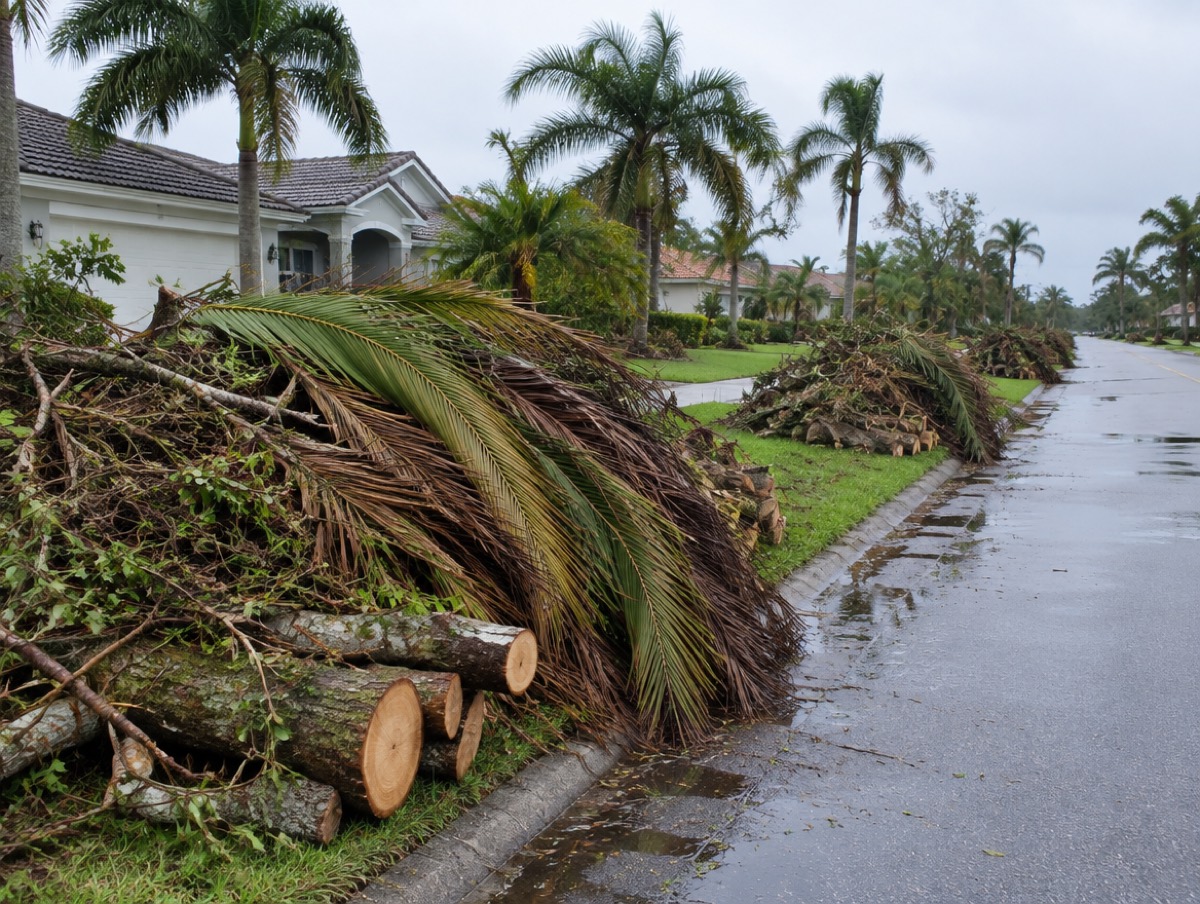
Haul it, chip it or leave it
Every tree job ends with the same question: what happens to the wood. There are a few ways to go, and they price differently:
- Leave the logs as rounds or stacked firewood, and have only the brush chipped
- Chip everything and dump the chips where you want mulch
- Chip the brush, haul the chips, and leave the trunk wood
- Haul every last piece and rake the yard clean
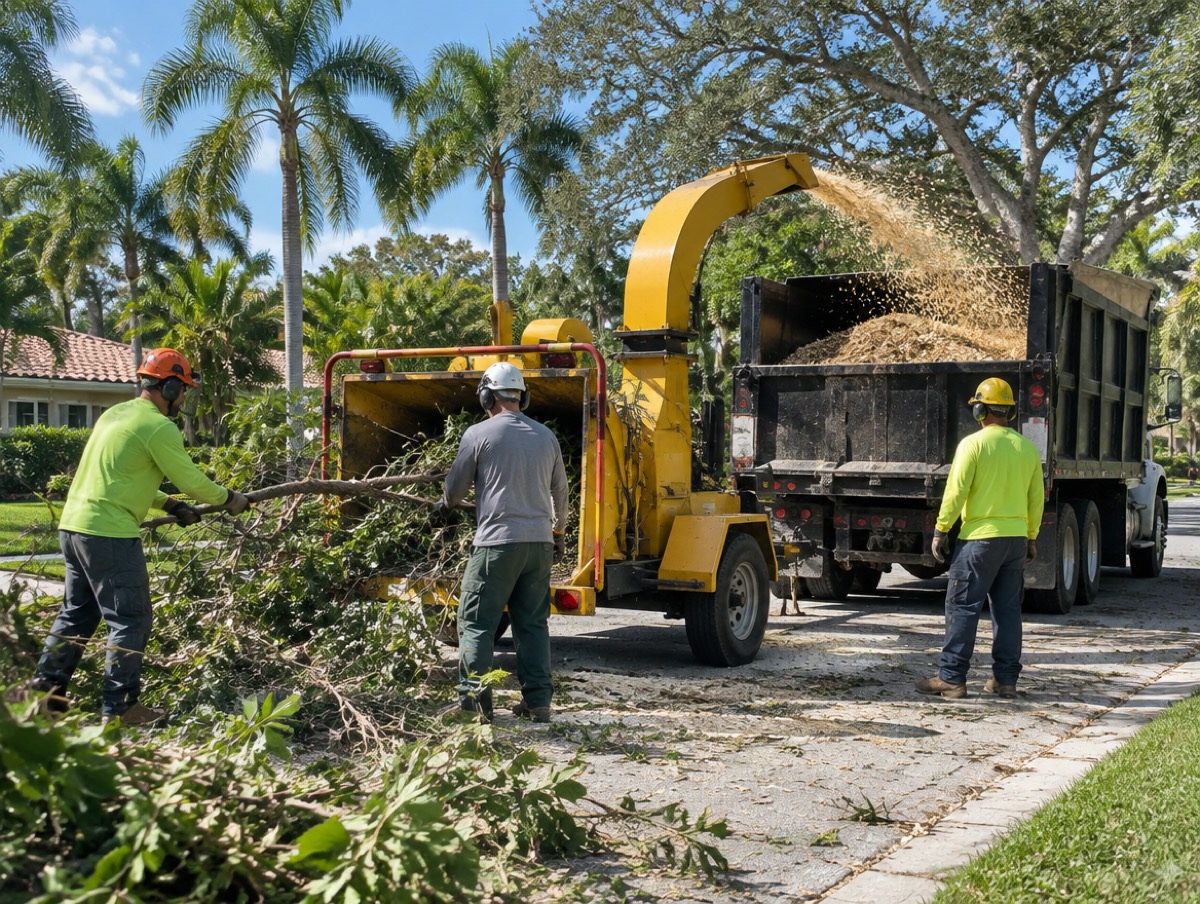
Chips are worth keeping, up to a point
Hauling everything is the most work for the crew, so it usually costs the most. Chips left on site make free mulch for beds, paths and the bare sand under an oak. A big tree can make more chips than most yards can use, though, so pick a spot that can take a mound and spread it over a few weekends.
What the crew needs to know to price it
Photos from two angles say more than any description. Beyond that, these are the questions that come up:
- Roughly how much: one pile by the curb, a pickup bed's worth, or the whole side yard
- What's in it: oak limbs, pine, palm fronds, logs too heavy to lift, or a mix
- Whether sand, roots, stumps or old fencing are tangled in
- How far the truck can get: driveway, gate width, soft ground behind the house
- Whether anything else is mixed in, like construction scrap or furniture, since a tree crew may not take it
Storm debris and the curb
After a named storm, curbside debris pickup is announced by the county or your city, and the details can change from one storm to the next. Read the current notice before you build a pile. The storm debris guide explains what to look for.
Private haul-away is the other route. People use it when they'd rather not wait for the pickup trucks, when the pile is mixed with things the pickup won't take, or when the debris is in the backyard and nobody wants to drag it to the curb.
If you're thinking about burning it
Read the rules first. The Florida Forest Service allows yard waste to be burned without its authorization only when it fits in an 8-foot pile or a noncombustible container, sits 25 feet from your house, woods and brush, 150 feet from other occupied buildings and 50 feet from paved public roads, is lit after 9 a.m. and is out an hour before sunset. Larger piles need an FFS authorization, and local ordinances may still prohibit burning (Florida Forest Service, burning yard waste).
Brevard also bans open burning automatically when the county's Keetch-Byram Drought Index average reaches 500, and the ban is suspended once it falls below 450 (Brevard County Code s. 50-1). In a dry spring the ban may already be on. This service doesn't arrange burning.
Pepper debris and the stumps it came from
Clearing Brazilian pepper makes a lot of brush, and hauling it away is only half the job. UF/IFAS says large stands resprout vigorously after mechanical removal and usually need herbicide or stump treatment (UF/IFAS, Brazilian peppertree). Ask the crew to treat or grind the stumps, so the pile you paid to haul doesn't grow back along the fence.
Questions people ask
What happens to the wood: haul away, chips or firewood?
Your choice, and it changes the price. Say what you want before the estimate, not after the saws stop.
Will the county pick up tree debris after a hurricane?
Curbside storm pickup is announced by the county or your city after a storm, with its own rules. Check the current notice, and see the storm debris guide. Private haul-away is the option when you can't or won't wait.
Can I keep the chips for mulch?
Usually, yes. Tell the crew where to dump them. A big tree makes a lot of chips, so pick a spot that can take a mound.
Can I burn the debris myself?
Only within Florida Forest Service rules and local ordinances, and never during a Brevard burn ban (FFS, Brevard County Code s. 50-1). Plenty of people skip it and have the brush chipped.
Will a crew haul away debris another company left?
Usually, yes. It's priced like any other haul: by volume, by what's in the pile and by how close the truck can get.