Who calls about commercial tree work
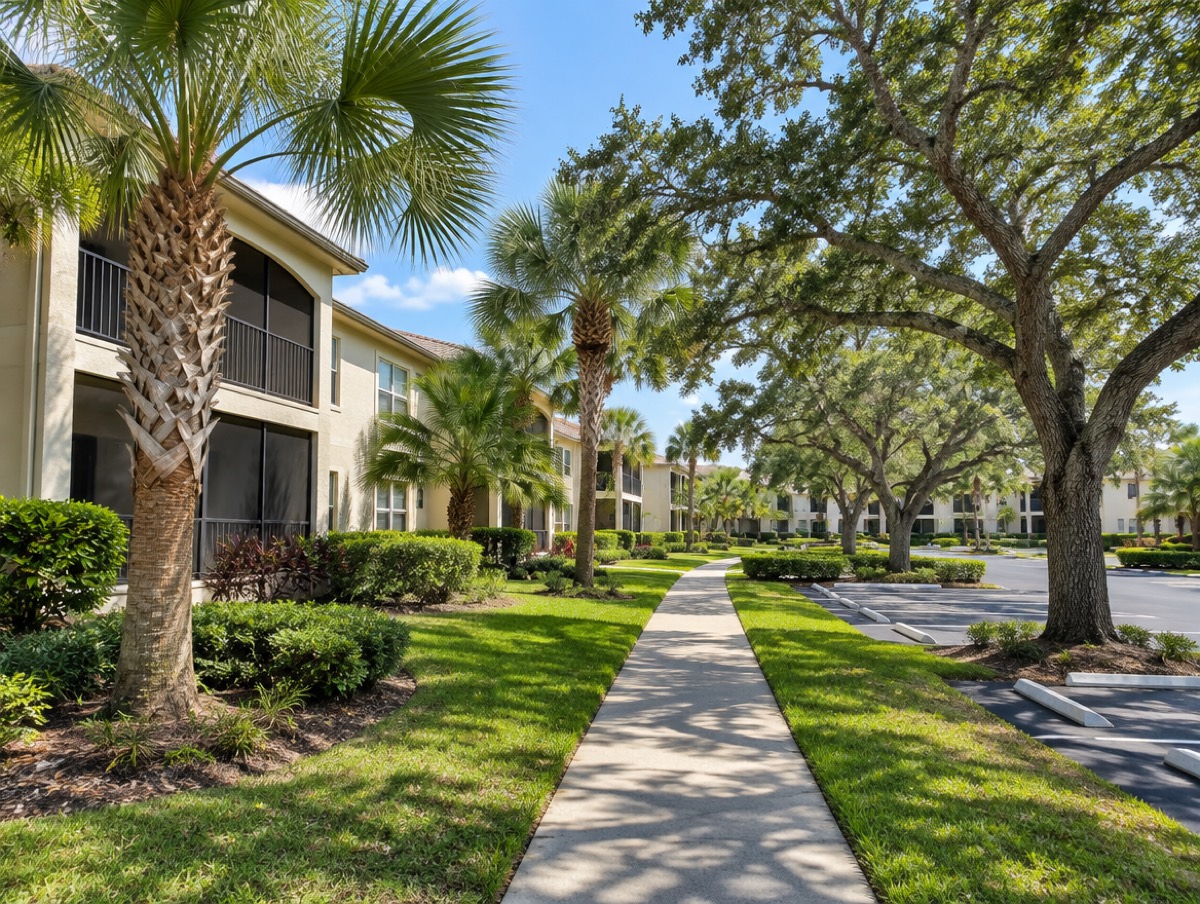
HOA boards and management companies in planned communities like Viera, Suntree and Bayside Lakes. Condo associations on the barrier island, from Cape Canaveral down to Melbourne Beach. Office parks, shopping centers, churches and apartment complexes on the mainland. The trees differ, but the paperwork looks much the same.
Permit rules are stricter off the single-family lot
The shortcuts homeowners rely on often don't apply here. Florida's section 163.045 risk-documentation exemption covers only a single-family detached home on a lot actively used as one, and multifamily property and commercial sites aren't covered (F.S. 163.045). Cocoa's code adds that HOA and condo common areas aren't residential property for that purpose (Cocoa Code, Appendix A, Art. XIII, s. 22).
City exemptions written for homeowners tend to stop at the lot line too. Titusville waives the permit for the owner of an existing single-family home but says common areas in developments are not exempt (Titusville LDR s. 30-39). Cocoa's tree protection rules apply to open space on developed property, though not to single-family or duplex lots (Cocoa Code).
On the unincorporated barrier island, the county's protected-tree threshold drops sharply: a hardwood or a pine counts as protected at 1.5 inches in trunk diameter, compared with 10 inches for hardwoods on the mainland and Merritt Island (Brevard County Code s. 62-4332). Satellite Beach requires a permit before a protected tree is removed or relocated, and it bars removing native dune vegetation seaward of the 1981 coastal construction control line (Satellite Beach Code, Chapter 30).
What property managers usually ask a crew for
Commercial work runs on paperwork. These are the items worth asking for up front:
- A certificate of insurance naming the association or owner, on file before the first cut
- A written scope tree by tree, keyed to a site map or tag numbers
- Notice to residents or tenants about parking, with dates
- Cones and a ground worker watching traffic in parking lots and drive aisles
- One invoice per work order or building, if that's how your books run
- A plan for storm callbacks: who calls whom after a hurricane, and in what order
Recurring work and the utility's part
Many associations end up on a cycle: palms trimmed on a schedule, common-area oaks pruned before storm season, and a walk-through after any big storm. Ask the crew to put a recurring scope in writing so the board can budget for it.
Lines along entrances and back property lines are the utility's business. FPL says it clears main lines about every 3 years and neighborhood lines about every 6, and that only specially trained line-clearing professionals should work around power lines (FPL tree FAQs). Florida law also stops local governments from requiring permits for vegetation maintenance inside an established electric utility right-of-way (F.S. 163.3209).
Board approvals and resident requests
A resident who wants a tree taken down on their own lot in an HOA may need the association's approval on top of any city or county permit, depending on the community's documents. Those rules live in the covenants, not the county code, so get any approval in writing before booking.
For board votes, a written scope with a photo of each tree makes the decision easier, and it gives the minutes something specific to record.
Questions people ask
Do I need HOA approval to remove a tree in Viera or Suntree?
That's set by your association's documents, not by the county. Ask the HOA or management company before booking, and get the approval in writing. City or county permit rules still apply on top of it.
Can an HOA use an arborist letter to skip the permit?
Not for common areas. Section 163.045 covers single-family detached homes on lots actively used as one (F.S. 163.045), and Cocoa's code spells out that HOA and condo common areas aren't included. Check with your city or the county.
Can work be scheduled around residents and business hours?
Ask the crew. Many can split a job across days or start at a set time, and some work weekends. Put the schedule in the written scope.
Who handles trees near the power lines along our entrance?
The utility. Report trees touching lines to your electric utility, since FPL says only specially trained line-clearing professionals should work around power lines (FPL tree FAQs).
Can several properties go on one schedule?
Yes, if the crew you're matched with covers all of them. Tell us where the properties are when you call, mainland and beachside, so the match fits.
Sources
- Florida Statutes s. 163.045, tree removal on residential property
- Cocoa Code of Ordinances, Appendix A, Art. XIII, s. 22
- Titusville LDR s. 30-39, tree removal permits
- Brevard County Code s. 62-4332, definitions
- Satellite Beach Code, Chapter 30, trees
- FPL, Trees and power lines FAQ
- Florida Statutes s. 163.3209, electric utility rights-of-way